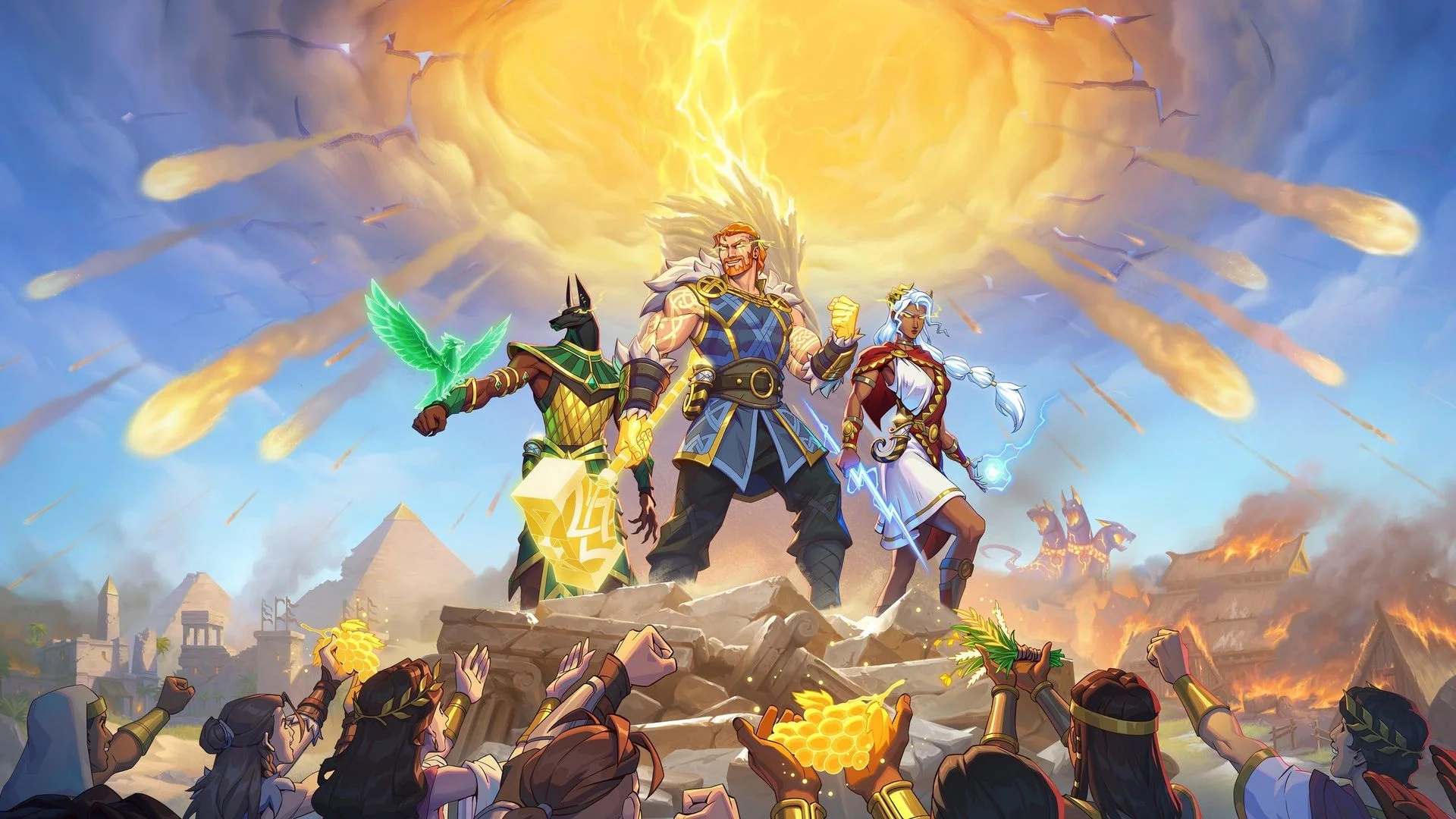
- Aftergods gameplay walkthrough: Master survival, exploration, combat, and building from day one.
- Nectar is strategic: Never spend it without a clear purpose before combat or expeditions.
- Divine vs mortal forms: Adapt your playstyle when divine power is limited or unavailable.
- Build your Pantheon: Recruit survivors and old gods to automate your settlement.
- Shapeshift for travel: Phoenix, Manticore, and Siren forms unlock different terrain routes.
Aftergods Gameplay Walkthrough: Core Systems Overview
Aftergods is a top-down open-world survival action RPG developed by Norsfall, set in a world shattered after Ragnarok. This gameplay walkthrough breaks down every major system you will interact with: the tension between divine and mortal forms, Nectar management, temple construction, follower recruitment, mythical shapeshifting, and giant monster encounters. The game supports solo play, online co-op, and offline play on PC, PlayStation 5, and Xbox Series.
| System | Role | Priority | Main Risk |
|---|---|---|---|
| Nectar | Powers divine form and Godborn progression | High | Entering danger with no reserves |
| Divine Form | Empowered state tied to your pantheon identity | High | Treating power as unlimited |
| Mortal Form | Vulnerable fallback state | High | Fighting as if power remains |
| Temple | Central base and progression hub | Medium | Over-expanding before resource stability |
| Followers | Workforce, automation, faith | Medium | Spreading roles too thin |
| Shapeshifting | Movement and exploration toolkit | Medium | Committing to one form in mixed terrain |
The game was publicly revealed on October 8, 2026, with a release date still to be announced. Systems described here reflect confirmed official information from the Aftergods official site and the Steam store page. Details may evolve before launch.
Step-by-Step Opening Walkthrough
Follow this sequence for a stable start. Each step builds toward a base that can support longer expeditions and boss encounters.
Understand the Godborn System
Learn how divine and mortal forms shape exploration, combat, and survival. Treat Nectar as your core progression resource, and recognize exactly when divine power is available before committing to a fight.
Secure Basic Resources
Gather materials for food, early equipment, and shelter before traveling far. Keep reserves for emergency recovery so you are never forced into dangerous zones unprepared.
Establish a Safe Base
Build a dependable return point with storage, crafting access, and room for future temple upgrades. Prioritize practical function over decorative expansion.
Explore in Short Routes
Map nearby resource nodes and threats with short round trips. Always keep a clear route back to base instead of carrying everything into unknown territory.
Prepare for Combat
Check equipment, food, Nectar, and escape routes before entering hostile areas. Choose battles that match your current progression level.
Choose Solo or Co-op Playstyle
Solo players should prioritize self-sufficiency and safe return routes. Groups should divide gathering, combat, construction, and exploration roles around a shared objective.
Do not chain multiple fights while depleted. Recover at a safe location, repair equipment, and reassess your Nectar supply before re-engaging.
Pantheons, Forms, and Shapeshifting Routes
Character identity in Aftergods is tied to ancient pantheon bloodlines: Greek, Egyptian, Norse, and an unknown mystery category. Alongside bloodline choice, shapeshifting forms define how you traverse the shattered world.
Greek Pantheon
- Classical divine identity
- Recognizable mythological theme
- Good starting reference point
Egyptian Pantheon
- Distinct cultural identity
- Strong visual theme
- Alternative to Greek tradition
Norse Pantheon
- Heroic post-Ragnarok theme
- Ties directly to world lore
- Strong narrative fit
| Form | Movement Role | Terrain Use | Best For |
|---|---|---|---|
| Phoenix | Aerial exploration | Open-air routes, vertical areas | Flying, surveying from above |
| Manticore | Land traversal | Rough terrain, long ground routes | Sustained overland movement |
| Siren | Aquatic exploration | Water routes, coastal regions | Swimming, water-separated areas |
| Form Switching | Adaptive traversal | Mixed regions | Cross-region expeditions |
Switch forms according to the obstacle ahead rather than committing to a single route through mixed environments. The most efficient path often combines aerial, ground, and water segments.
Survival, Nectar, and Base Management
Survival in Aftergods follows a "survivalite" design that reduces repetitive grinding and harsh punishment. The core loop is balancing immediate needs against preserving divine potential.
| Survival System | Recommended Action | Priority |
|---|---|---|
| Nectar | Track supply before exploration; never spend without purpose | High |
| Divine Form | Deploy when it gives a meaningful combat or expedition advantage | High |
| Mortal Form | Avoid fights, retreat, rely on preparation and positioning | High |
| Food | Prepare before long trips; keep return-journey reserve | Medium |
| Dangerous Areas | Scout gradually; enter with clear objective and escape route | High |
| Resources | Separate expedition stock from emergency reserves | Medium |
Base development progresses through resource gathering, early crafting, equipment upgrades, temple construction, and eventually automated production supported by Followers. Match each Follower's assignment to your settlement's current bottleneck rather than spreading contributions across every task.
Build essential functions first: secure storage, a crafting cycle, and a stable local resource supply. Only then invest in automation and larger temple projects.
Boss Encounters and Co-op Strategy
Giant monsters are environmental encounters as much as combat targets. Preparation decides outcomes more reliably than raw aggression.
Solo Approach
- Choose a form matching the arena with escape options
- Keep resources for multiple engagement windows
- Use short attack opportunities, limit exposure
- Return to base and re-prepare if unsustainable
Co-op Approach
- Assign one player to maintain pressure
- Others watch routes, hazards, and positioning
- Coordinate form changes across air, land, water
- Communicate before starting the engagement
Confirm your movement forms suit the surrounding terrain, bring supplies for a prolonged encounter, and plan an escape route before the fight begins.
Walkthrough Checklist and FAQ
Core Walkthrough Milestones:
- Understand divine and mortal form dynamics
- Secure stable food and basic resource supply
- Establish a safe base with storage and crafting
- Recruit first Followers and begin temple construction
- Unlock and practice all shapeshifting forms
- Defeat your first giant monster solo or in co-op
Q: What is the core gameplay loop in the Aftergods gameplay walkthrough?
The loop alternates between gathering and crafting at your temple, exploring in short safe routes, and spending Nectar strategically during combat or expeditions. When divine power runs low, you fall back to mortal form and rely on preparation and positioning.
Q: Can I play Aftergods solo, or is co-op required?
Aftergods supports solo play, online co-op, and offline play, with P2P hosting and dedicated servers planned. Solo players should prioritize self-sufficiency and conservative routes, while groups divide gathering, combat, and construction roles.
Q: Which shapeshifting form should I use first?
The Manticore is the dependable overland form for early ground routes. Use the Phoenix for aerial and vertical routes and the Siren for water crossings. Switch forms based on the obstacle ahead instead of committing to one.
Q: When does Aftergods release?
Aftergods was revealed on October 8, 2026, and a release date has not yet been announced. It is planned for PC, PlayStation 5, and Xbox Series. Follow the official site and Steam page for updates.