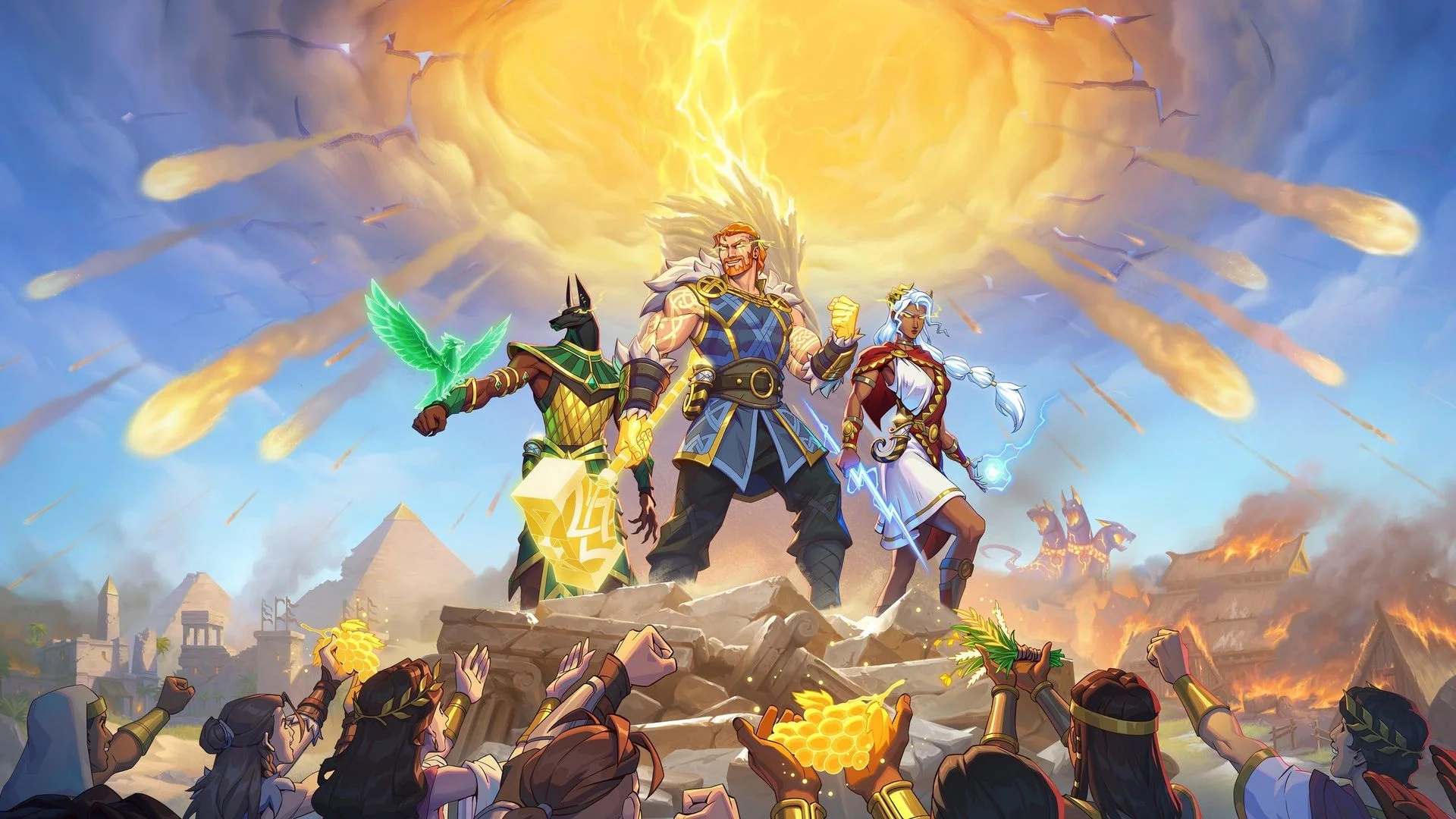
- Aftergods boss fights blend combat with terrain, movement forms, and resource management.
- Nectar is your lifeline: never enter a major encounter without sufficient divine reserves.
- Shapeshifting forms (Phoenix, Manticore, Siren) determine your escape routes and positioning.
- Co-op teams should split into damage, positioning, and terrain-watch roles before engaging.
- Preparation beats persistence: retreat, restock, and return rather than chaining failed attempts.
How Aftergods Boss Fights Work
Boss fights in Aftergods are not pure damage checks. Set after Ragnarok, the game pits your Godborn against giant monsters roaming a shattered open world, and every large encounter doubles as an environmental challenge. The battlefield, your movement forms, and your Nectar reserves matter as much as your weapon.
Three pillars define every major encounter:
| Pillar | What It Covers | Why It Matters |
|---|---|---|
| Divine power | Nectar spending, divine vs. mortal form | Determines your damage ceiling and survivability |
| Terrain | Arena layout, hazards, escape routes | Large monsters control space; you must too |
| Preparation | Equipment, food, Pantheon support | Failed runs usually trace back to missing supplies |
Losing divine power mid-fight forces you into your vulnerable mortal form. Never fight on as if nothing changed. Disengage, reposition, and either recover or retreat to your base.
Because the game supports solo play, online co-op, and offline modes with P2P hosting and dedicated servers, boss difficulty expectations shift with your party size. Groups can absorb mistakes; solo players cannot.
Pre-Fight Preparation Checklist
Every successful boss attempt starts at your base, not at the arena. Use this checklist before departing for any major encounter.
Before You Engage:
- Repair or replace worn equipment
- Stock Nectar reserves for multiple engagement windows
- Prepare food and supplies for a prolonged fight
- Confirm movement forms match the arena terrain
- Plan a reliable escape route back to safety
- Review Pantheon and settlement support status
The table below maps preparation categories to their failure risk when skipped:
| Prep Category | Priority | Risk If Skipped |
|---|---|---|
| Nectar reserves | High | Losing divine form mid-encounter |
| Equipment condition | High | Gear failure during extended engagements |
| Terrain-appropriate form | High | No escape route when the monster repositions |
| Food supplies | Medium | Forced withdrawal late in a long fight |
| Emergency resource buffer | Medium | No recovery option after a failed attempt |
Separate expedition resources from emergency reserves. If your boss-attempt supplies overlap with your survival buffer, one bad fight can strand you far from base.
Reading a Giant Monster: Combat Approach
Treat every giant monster as an environmental encounter, not just a target. Observe before committing.
Observe Movement Patterns
Watch how the monster patrols, attacks, and repositions before you close distance. Identify its spacing habits and safe approach angles.
Control Positioning with Terrain
Use terrain features and shapeshifting to keep access to safe positions. Never rely on a single movement route when the fight covers a large area.
Take Short Engagement Windows
Attack in brief bursts instead of staying exposed. Long engagements drain Nectar and invite punishing counters from giant monsters.
Adapt as the Fight Changes
Adjust your forms and angles as the encounter evolves. Repeating the same attack pattern into a shifting fight is the fastest way to lose divine form.
A boss arena that includes air, land, and water elements rewards form switching. Match your mythical form to the obstacle directly ahead rather than committing to one route.
Shapeshifting in Boss Encounters
Your mythical forms are combat and mobility tools wrapped into one. Each form suits a different arena style.
Phoenix
- Aerial repositioning
- Escape ground-level threats
- Survey the arena from above
Manticore
- Sustained overland mobility
- Cross rough ground quickly
- Dependable escape form on land
Siren
- Aquatic escapes
- Reach areas separated by water
- Alternative approach angles
| Form | Boss Arena Fit | Best Use in Fight | Escape Value |
|---|---|---|---|
| Phoenix | Open vertical arenas | Quick aerial disengage | ★★★★★ |
| Manticore | Wide ground arenas | Sustained mobility | ★★★★ |
| Siren | Water-adjacent arenas | Aquatic repositioning | ★★★★ |
| Form switching | Mixed terrain | Adaptive response | ★★★★★ |
Check the arena's terrain before the fight starts. Entering a water-adjacent boss arena without Siren ready removes an entire escape dimension.
Solo vs. Co-op Boss Strategies
Solo approach: Prioritize mobility, conservative Nectar spending, and controlled engagements. Keep enough resources for multiple engagement windows, and return to base to adjust preparation if your current approach is not sustainable.
Co-op approach: Cooperative groups can divide responsibilities to make large encounters far easier to manage. Aftergods supports online co-op alongside solo and offline play.
| Element | Solo | Co-op |
|---|---|---|
| Damage output | Burst windows only | One player maintains constant pressure |
| Positioning | Personal escape routes | Teammates watch terrain hazards |
| Form usage | One form at a time | Coordinate group form changes across terrain |
| Recovery | Return to base | Teammates cover during recovery |
| Communication | Self-assessment | Align before starting the engagement |
Recommended co-op role split:
Pressure Role
- Maintains damage on the monster
- Absorbs attention
- Calls phase changes
Terrain Watch
- Monitors hazards and routes
- Tracks safe positioning
- Warns of repositioning threats
Support Role
- Manages shared supplies
- Covers recovering players
- Coordinates form switches
Communicate before starting a major engagement so the entire team commits at the same moment. Staggered entries waste Nectar and split the monster's attention unpredictably.
FAQ
Q: What happens if I lose divine power during an Aftergods boss fight?
You drop into your vulnerable mortal form. Stop fighting aggressively, avoid unnecessary engagements, and use preparation and positioning to retreat safely. Recover Nectar at a safe location before re-engaging.
Q: Can I fight bosses solo, or is co-op required?
Aftergods supports solo play, online co-op, and offline modes, so bosses can be tackled alone. Solo players should prioritize mobility, escape routes, and conservative Nectar management, since a group can absorb mistakes a solo player cannot.
Q: Which shapeshifting form is best for boss fights?
There is no single best form. Phoenix excels in open vertical arenas, Manticore in wide ground arenas, and Siren near water. Match the form to the arena terrain and keep a form switch available as an escape option.
Q: How do I prepare Nectar for a major boss encounter?
Track your supply before exploration or combat and avoid spending Nectar without a clear purpose. Keep reserves for multiple engagement windows, and separate expedition resources from your emergency buffer so a failed attempt does not strand you.
For the latest confirmed details on Aftergods boss encounters, movement forms, and release timing, follow the official Aftergods website, the Steam store page, and the official Discord. This guide will be updated as official boss mechanics and encounter details are announced.