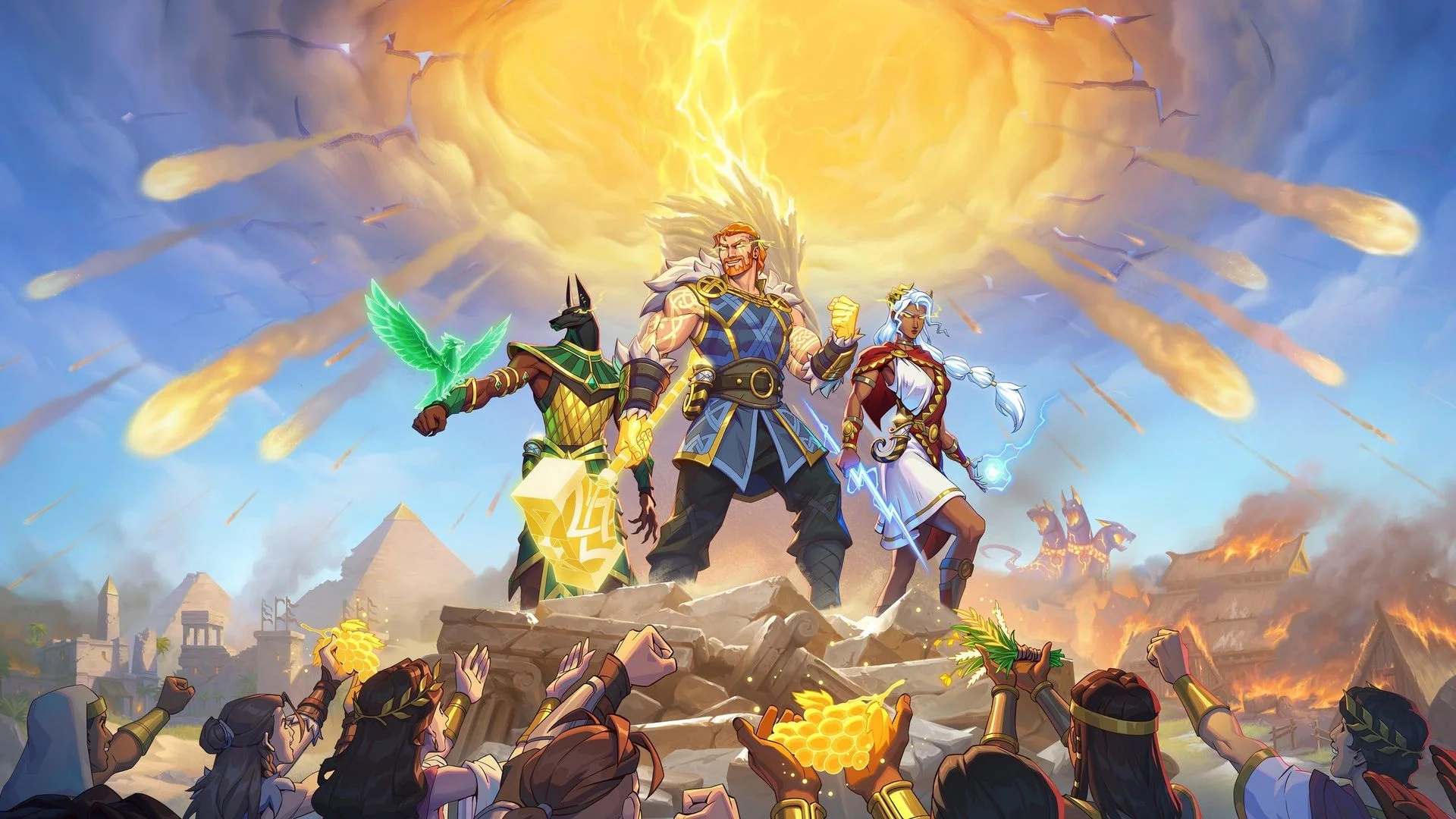
- Aftergods full game is a mythic open-world survival action RPG from Norsfell for PC, PS5, and Xbox Series.
- Core loop: play as a Godborn, manage Nectar, build temples, recruit Followers, and restore World Tree seeds.
- Shapeshifting into Phoenix, Manticore, and Siren forms defines exploration across air, land, and water.
- Solo and online co-op are both supported, with P2P hosting and dedicated server design.
- Release date is TBA — always verify news via the official site, Steam page, and Discord.
Aftergods Full Game Overview: What the World Contains
The Aftergods full game experience takes place after Ragnarok has shattered the old world. You play as a Godborn — a survivor carrying divine blood — exploring a broken world, gathering World Tree seeds, and rebuilding power from the ruins. The game is developed by Norsfell and revealed on October 8, 2026, with a release date still marked as TBA on the official Steam listing.
The game blends several genres into one loop:
| System | What It Does | Why It Matters |
|---|---|---|
| Godborn identity | Frames your character's divine and mortal states | Shapes every combat and exploration decision |
| Nectar management | Fuels divine power and progression | Core strategic resource, not an auto-spent meter |
| Temple building | Central base and divine monument | Long-term progression hub |
| Pantheon recruiting | Adds Followers, survivors, and old gods | Automates production and expands faith |
| Shapeshifting | Phoenix, Manticore, Siren travel forms | Redefines movement across terrain types |
| Boss encounters | Giant monsters across the realms | Tests preparation, positioning, and teamwork |
Treat Aftergods as a "survivalite" — the design intentionally reduces repetitive survival chores and harsh punishment loops. Focus on preparation cycles rather than grind.
Pantheons and Bloodlines: Choosing Your Godborn Direction
Character identity in the Aftergods full game connects to ancient pantheons. Four bloodline themes are currently identified, and each pairs well with a broader growth direction — combat, exploration, or building.
| Bloodline | Theme | Best For |
|---|---|---|
| Greek | Classical divine identity | Players wanting a recognizable mythic tradition |
| Egyptian | Strong visual and cultural identity | Players seeking distinct divine aesthetics |
| Norse | Heroic, post-Ragnarok themes | Players drawn to the game's core setting |
| Unknown | Mystery-oriented progression | Lore hunters and discovery-focused players |
Combat-Oriented Godborn
- Equipment readiness first
- Sustained engagement capability
- Best for hostile-region explorers
Exploration-Oriented Godborn
- Route knowledge and mobility
- Extended expedition range
- Avoids unnecessary fights
Builder-Oriented Godborn
- Temple and production focus
- Stable resource cycles
- Long-term settlement growth
The Unknown bloodline is deliberately unresolved. Do not assume a fixed specialization — treat it as a discovery path until official details expand the Pantheon system.
Survival and Nectar: Managing Divine and Mortal States
Survival in the Aftergods full game depends on when to spend divine power and when to hold back. Nectar supports your divine form; when reserves run low, you fall back on mortal capabilities — slower, more vulnerable, and dependent on preparation.
| System | Priority | Recommended Action | Main Risk |
|---|---|---|---|
| Nectar | High | Track supply before combat or travel | Entering danger without reserves |
| Divine Form | High | Use for meaningful advantages only | Treating power as unlimited |
| Mortal Form | High | Avoid fights, return to safety | Fighting as if still divine |
| Food | Medium | Prepare for round trips | Extending depleted expeditions |
| Dangerous Areas | High | Scout gradually with escape routes | Over-extending preparation level |
| Recovery | High | Restock gear and Nectar after fights | Chaining fights while depleted |
Spending Nectar automatically and reaching a dangerous region with no divine fallback. Separate expedition resources from emergency reserves before every major trip.
Shapeshifting and Exploration Forms
Movement is the heart of exploration. Each mythical form answers a different terrain problem, and smart players switch forms based on the obstacle ahead rather than committing to one route.
| Form | Movement Role | Terrain Use | Best For |
|---|---|---|---|
| Phoenix | Aerial exploration | Open-air, vertical routes | Flying, surveying from above, bypassing ground obstacles |
| Manticore | Land traversal | Rough overland terrain | Extended ground routes, hostile wilderness |
| Siren | Aquatic exploration | Water regions | Swimming, water-separated locations |
| Form Switching | Adaptive traversal | Mixed regions | Cross-region expeditions combining all three |
Before leaving base, confirm your movement forms match the terrain of your destination. A route that requires water crossing without Siren access is a failed plan before it starts.
Step-by-Step: Your First 10 Hours
Understand the Godborn System
Learn when divine power is available, the limits of mortal form, and why Nectar is the backbone of both survival and progression.
Secure Basic Resources
Gather food, early equipment materials, and construction supplies close to your starting area before venturing deeper.
Establish a Safe Base
Build a functional return point with storage, crafting access, and reserved space for future temple upgrades.
Explore in Short Routes
Map nearby resources and threats, keep a clear route home, and return regularly instead of overcommitting.
Recruit and Build Your Pantheon
Rescue survivors, recruit old gods, and assign Followers to the settlement's most urgent bottleneck — automation, faith, or field support.
Early Game Milestones:
- Learn the divine and mortal form cycle
- Stock emergency Nectar and food reserves
- Build a base with storage and crafting
- Map two nearby resource routes
- Recruit your first Followers
- Unlock a second shapeshifting form
Bosses, Followers, and Co-op Strategy
Giant monsters in the Aftergods full game are environmental encounters, not just health bars. Observe movement patterns first, use terrain and shapeshifting for safe positioning, and adjust your approach as the fight evolves.
Solo players should prioritize mobility, controlled engagement windows, and enough resources for multiple attempts. Co-op groups divide responsibilities effectively:
| Co-op Role | Responsibility |
|---|---|
| Pressure player | Maintains aggression on the monster |
| Positioning player | Watches routes, hazards, and flanks |
| Support player | Manages supplies and recovery timing |
| Scout player | Tracks terrain and escape options |
Communicate form changes before crossing air, land, or water routes mid-fight. A team split across incompatible terrain loses its pressure role instantly.
The game supports solo play, online co-op, and offline play, with P2P hosting and dedicated server design confirmed in public listings — check the official Steam page and Gematsu listing for the latest networking details.
FAQ
Q: Is the Aftergods full game released yet?
No. Aftergods was revealed on October 8, 2026, and the official release date is still listed as TBA. Follow the official website, Steam store page, and Discord for announcements.
Q: What platforms will Aftergods launch on?
The game is confirmed for PC, PlayStation 5, and Xbox Series, with a Steam store page already live and 12 interface languages supported.
Q: Can I play Aftergods solo, or is it co-op only?
Both. Aftergods supports solo play, online co-op, and offline play, with P2P hosting and dedicated server options planned.
Q: Are there redeem codes for Aftergods?
There are currently no confirmed redeem codes or verified reward systems for Aftergods. Any code lists circulating before launch should be treated as unverified — rely only on official channels.