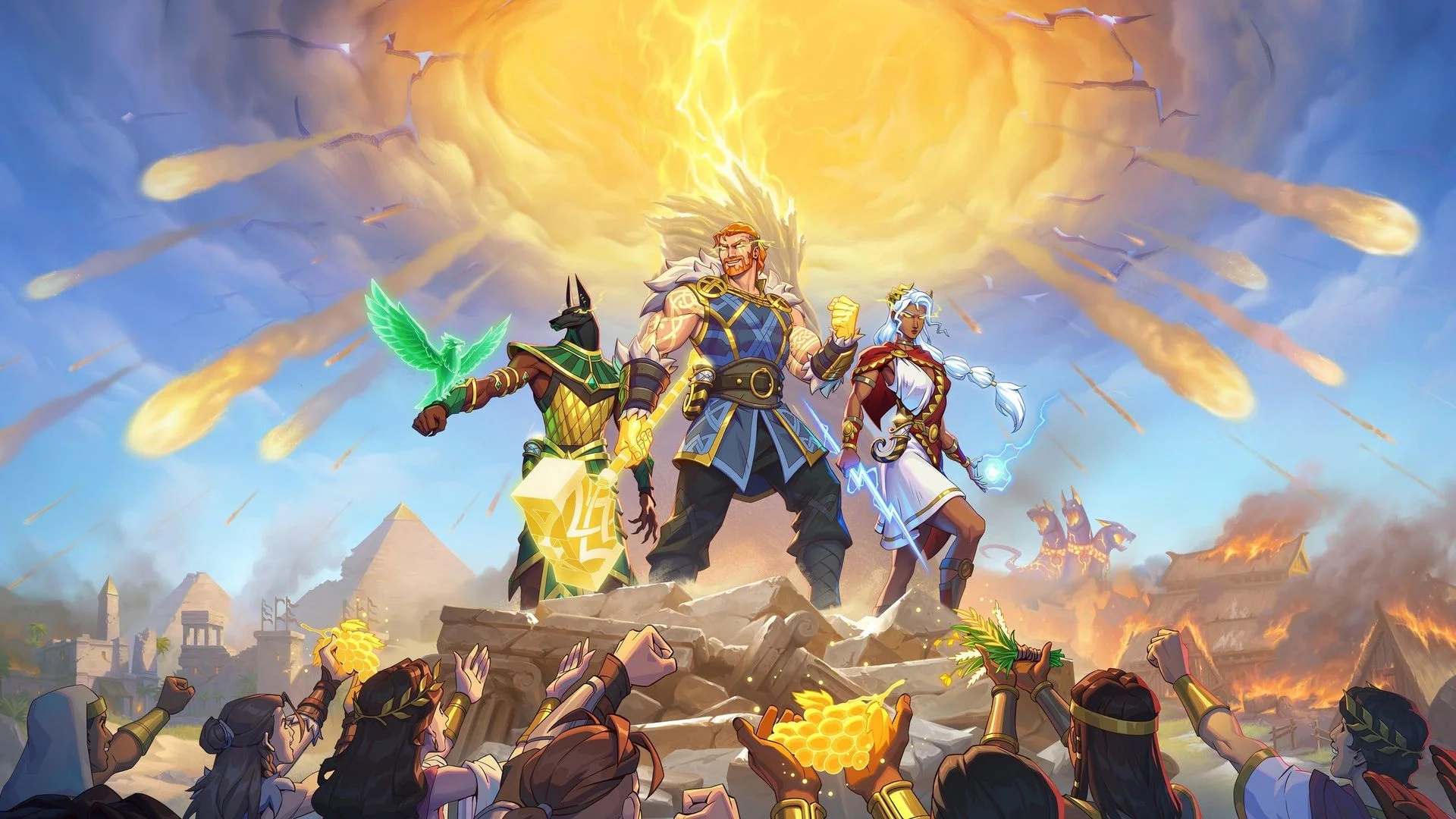
- Aftergods combat blends top-down action with a divine power economy tied to Nectar.
- Divine and mortal forms change your combat effectiveness — manage the switch deliberately.
- Shapeshifting into Phoenix, Manticore, or Siren adapts movement and engagement style.
- Giant monster fights reward preparation, positioning, and terrain reading over raw damage.
- Co-op roles let groups split pressure, positioning, and support duties.
Core Combat Systems in Aftergods
Aftergods is a top-down mythological survival action RPG from Norsfell, set in a world after Ragnarok. Combat is built around three interlocking systems: your Godborn identity, the tension between divine and mortal forms, and Nectar as the resource that sustains your divine power. Fights go poorly when these systems are treated as separate — they work as a single preparation cycle.
The divine form delivers your strongest capabilities, but it is not unlimited. When Nectar runs low, your Godborn drops into the vulnerable mortal form, where survival depends on equipment, positioning, and preparation rather than raw power.
| System | Combat Role | Priority | Key Risk |
|---|---|---|---|
| Nectar | Fuels divine power and Godborn progression | High | Entering fights without reserves |
| Divine form | Empowered state for difficult encounters | High | Treating power as unlimited |
| Mortal form | Vulnerable fallback state | High | Fighting as if still divine |
| Equipment | Sustains survivability away from base | Medium | Worn gear before long expeditions |
| Recovery | Post-fight stabilization | High | Chaining fights while depleted |
Avoid exhausting Nectar before a dangerous encounter. Track your supply before exploration or combat, and avoid spending it without a clear purpose — reaching a dangerous region with no divine reserve is the most common early failure.
Mythical Forms and Combat Mobility
Shapeshifting is both a traversal and combat tool. Each mythical form suits different terrain and engagement styles, and the strongest players switch forms to match the obstacle ahead instead of committing to a single route through mixed environments.
| Form | Movement Role | Best Combat Use |
|---|---|---|
| Phoenix | Aerial exploration | Flying between elevated areas, surveying routes, escaping ground pressure |
| Manticore | Land traversal, rough terrain | Sustained overland mobility, engaging through hostile wilderness |
| Siren | Aquatic exploration | Water-crossing approaches, alternative attack angles from water |
| Form switching | Adaptive traversal | Mixing movement types mid-encounter |
Phoenix Playstyle
- Air superiority
- Bypasses ground-level obstacles
- Best for recon and rapid repositioning
- Weak when forced into tight ground fights
Manticore Playstyle
- Dependable overland form
- Strong through hostile wilderness
- Ideal for extended expeditions
- Less useful across water or vertical walls
Siren Playstyle
- Aquatic control
- Reaches water-separated positions
- Opens alternative approach paths
- Limited on dry, open terrain
Choose a form that matches the encounter area and provides a reliable escape option. Giant monster fights often span air, land, and water routes — never rely on a single movement path when the battlefield is large.
Combat Preparation: Step-by-Step
Combat in Aftergods is safest when approached as part of a preparation cycle, not an isolated event. Follow this routine before every hostile encounter.
Check Equipment Readiness
Maintain usable equipment before leaving camp. Worn or missing gear is the easiest failure to prevent — repair or replace before departure, not mid-expedition.
Audit Nectar and Supplies
Review your Nectar reserve, food, and emergency materials. Separate expedition resources from recovery reserves so one bad fight does not wipe out your buffer.
Prepare Your Forms
Confirm your movement forms match the surrounding terrain. If the encounter area includes water or vertical obstacles, plan which form covers each phase of the approach and retreat.
Plan the Escape Route
Map a clear route back to your base before entering hostile territory. A reliable retreat turns a losing fight into a setback instead of a disaster.
Engage in Controlled Windows
Use short attack opportunities rather than remaining exposed. Disengage, recover, reassess Nectar, and re-enter only when the engagement still supports your current progression.
Choose battles that support your current progression. If an approach is not sustainable, return to base, adjust preparation, and upgrade your loadout before difficulty increases — not after repeated failures.
Giant Monster and Boss Tactics
Large monsters in Aftergods are environmental encounters as much as combat targets. Reading them correctly matters more than any single loadout choice.
Reading a giant monster:
- Observe movement patterns before committing to a close approach
- Use terrain and shapeshifting to maintain access to safe positions
- Avoid relying on one movement route when the fight covers a large area
- Adjust your approach as the encounter changes rather than repeating one attack pattern
| Situation | Recommended Response |
|---|---|
| Monster covers large area | Switch forms to exploit air/land/water routes |
| Nectar running low mid-fight | Disengage, retreat to safety, reassess before re-entering |
| Solo and exposed too long | Take short attack windows, keep escape form ready |
| Group without coordination | Communicate before engaging so the team enters together |
Recover at a safe location, repair equipment, and reassess Nectar after every major hostile encounter. Chaining multiple fights while depleted is the fastest way to lose progress.
Solo vs Co-op Combat Roles
Solo players should prioritize mobility, preparation, and controlled engagements, while cooperative groups can divide responsibilities to make large encounters far more manageable. Aftergods supports solo play, online co-op, and offline play, so both approaches are fully viable.
Solo Approach
- Prioritize self-sufficiency and safe return routes
- Keep resources for multiple engagement windows
- Choose flexible forms over specialized ones
- Retreat and reprepare when unsustainable
Co-op Approach
- Assign one player to maintain monster pressure
- Others watch movement routes and terrain hazards
- Coordinate form changes across air, land, and water
- Enter major engagements together, not piecemeal
The most effective co-op teams split into pressure, positioning, and support roles before the fight starts. A group that engages without assigned roles fights like four solo players standing near each other.
Combat Readiness Checklist and FAQ
Use this checklist before any major hostile encounter or boss expedition in Aftergods.
Pre-Combat Checklist:
- Equipment repaired and replacement gear stored
- Nectar reserve confirmed for the intended divine approach
- Food and supplies packed for the return journey
- Movement forms matched to encounter terrain
- Escape route back to base mapped
Q: What is the core resource behind Aftergods combat?
Nectar is the core resource connected to divine power and Godborn progression. Treat it as a strategic reserve: track it before exploration or combat, and avoid spending it without a clear purpose.
Q: What happens when divine power runs out?
Your Godborn falls back to the mortal form, a vulnerable state. Avoid unnecessary fights, return to safer areas, and rely on preparation, equipment, and positioning until you can recover.
Q: Which mythical form is best for fighting?
There is no single best form. Phoenix suits aerial control, Manticore is dependable overland, and Siren controls water approaches. Switch forms according to the obstacle ahead rather than committing to one.
Q: How do co-op teams handle giant monsters?
Assign one player to maintain pressure while others watch movement routes, terrain hazards, and positioning. Coordinate form changes when the group must cross air, land, or water routes, and communicate before starting the engagement.