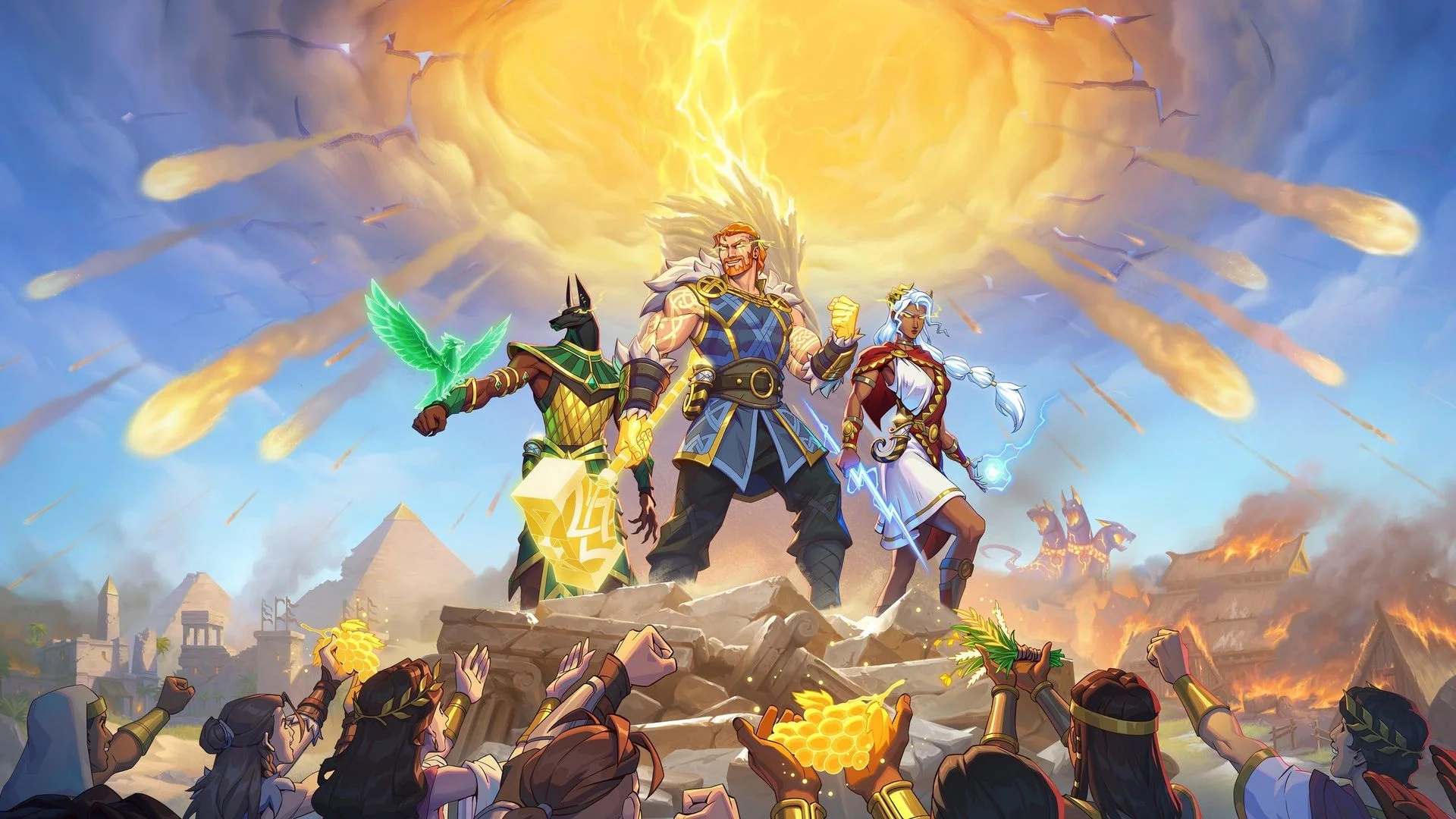
- Aftergods beginner guide: Start by understanding the Godborn system and the tension between divine and mortal forms.
- Nectar is your core strategic resource — never spend it without a clear purpose.
- Build a safe base early so you always have a recovery point before deep exploration.
- Explore in short routes and keep a clear way back to camp.
- Solo rewards caution; co-op rewards divided roles across gathering, combat, and building.
Core Systems Every New Godborn Must Know
Aftergods is a top-down open-world survival action RPG set after Ragnarok. You play as a Godborn — a survivor carrying the blood of dead gods — and your progression revolves around balancing divine power with mortal vulnerability. Before touching anything else, learn how these two states interact.
Your divine form is the empowered state tied to your character's divine identity, and it is fueled by Nectar. Your mortal form is what you fall back on when divine power runs low. Treating divine power as unlimited is the single most common beginner mistake: players burn Nectar early, then stumble into a dangerous region with nothing in reserve.
Divine Form
- Empowered state tied to your pantheon identity
- Spend for difficult encounters and key expeditions
- Depends on Nectar reserves
Mortal Form
- Vulnerable fallback when power fades
- Rely on equipment, positioning, preparation
- Avoid unnecessary fights
Nectar
- Strategic resource, not an auto-spend
- Track supply before every combat or trip
- Keep an emergency buffer
| System | Role | Priority | Recommended Action |
|---|---|---|---|
| Nectar | Fuels divine power and progression | High | Track supply before exploration; spend only with purpose |
| Divine Form | Empowered combat state | High | Reserve for meaningful advantages |
| Mortal Form | Vulnerable recovery state | High | Retreat, reposition, avoid fights |
| Food | Sustenance during expeditions | Medium | Prepare before trips; keep a return reserve |
| Dangerous Areas | High-risk locations | High | Scout gradually; keep escape routes |
| Combat Recovery | Post-fight stabilization | High | Repair gear, reassess Nectar before continuing |
Chaining fights while depleted. After any hostile encounter, return to safety, repair or replace equipment, and reassess your Nectar before committing to the next engagement.
Opening Progression: Step-by-Step
The opening hours determine how smooth the rest of your run feels. Follow this sequence to establish a stable foundation before chasing deeper exploration or giant monster fights.
Understand the Godborn System
Learn when divine power is available, recognize the strengths and limits of mortal form, and treat Nectar as your core progression resource. Every later decision flows from this balance.
Secure Basic Resources
Gather materials for food, early equipment, shelter, and first construction before traveling far from your starting area. Keep reserves for emergency recovery.
Establish a Safe Base
Build an early base as a dependable return point: secure recovery, organized storage, crafting access, and planned space for your future temple.
Explore in Short Routes
Map nearby resource and danger zones in short loops. Return regularly instead of hauling everything into unknown territory. Postpone deep expeditions until supplies are stable.
Prepare for Combat
Treat every fight as part of a preparation cycle: check equipment, food, Nectar, and your escape route before entering hostile areas.
Combat becomes far safer when approached as a cycle — prepare, engage, recover, restock — rather than as a test of raw strength. Choose battles that support your current progression stage.
Crafting, Temple Building, and Followers
Crafting and building form the long-term backbone of your run. Early development should prioritize function over decoration: survival tools, dependable equipment, and a clean temple layout. As your settlement matures, production systems and Followers reduce the grind of manual gathering.
| Development Stage | Focus | Key Uses | Priority Rule |
|---|---|---|---|
| Resource Gathering | Foundation | Food, gear, construction | Secure local supply before expanding |
| Early Crafting | Equipment | Usable gear, replacements | Practical upgrades first |
| Equipment Growth | Equipment | Combat readiness | Upgrade before difficulty rises |
| Temple Construction | Building | Base operations, storage | Essential functions first |
| Base Development | Building | Storage, crafting, recovery | Efficiency over decoration |
| Automated Production | Production | Recurring supplies | Automate what you repeatedly need |
| Follower Contributions | Followers | Construction and output | Match each Follower to the current bottleneck |
When recruiting, prioritize based on what your settlement actually lacks rather than collecting everyone at once:
Survivor Recruits
- Workforce for early growth
- Supports longer expeditions
Old Gods
- Shapes your Pantheon
- Ties settlement to faith systems
Automation Specialists
- Keep production running while away
- Reduce routine management
Expedition Support
- Complement shapeshifting travel
- Prepare for unfamiliar regions
Once your resource cycle is stable, shift recurring materials into automated production. This is the turning point where exploration stops competing with survival chores.
Exploration and Shapeshifting Basics
Shapeshifting is your flexible movement system. Each mythical form suits different terrain, so switch forms based on the obstacle ahead instead of forcing one route through mixed environments.
| Form | Movement Role | Terrain Use | Best For |
|---|---|---|---|
| Phoenix | Aerial exploration | Open-air and vertical routes | Flying between heights, surveying from above, bypassing ground obstacles |
| Manticore | Land traversal | Rough ground, hostile wilderness | Long overland routes, crossing blocked areas |
| Siren | Aquatic exploration | Water routes | Swimming, reaching water-separated locations, alternate approaches |
| Form Switching | Adaptive traversal | Mixed regions | Combining air, land, and water in one expedition |
Before a long expedition, identify which forms the route requires and confirm your Nectar and supplies cover the return journey — not just the outbound leg.
Solo vs. Co-op: Choosing Your Playstyle
Both modes are fully supported — solo with offline play, and online co-op — so pick the approach that matches your group size and adjust your preparation accordingly.
| Mode | Strengths | Recommended Approach |
|---|---|---|
| Solo | Full control of pace and risk | Flexible prep, conservative routes, safe returns |
| Co-op | Divided roles, shared supplies | Assign complementary gathering and combat roles |
Solo players benefit from self-sufficiency: keep escape options open, choose a form matching the encounter area, and take short attack windows rather than long exposures.
Co-op groups succeed through division of labor: one player maintains pressure on a monster while others watch movement routes and terrain hazards. Coordinate form changes when the party must cross air, land, or water, and communicate before every major engagement so the team enters together.
Before any giant monster encounter: confirm movement forms match the terrain, bring supplies for a prolonged fight, review Pantheon support, and plan an escape route in case the battlefield turns against you.
Early Game Milestones:
- Understand divine and mortal form switching
- Secure a stable basic resource supply
- Establish a safe base with storage and crafting
- Complete three short exploration loops
- Recruit your first Followers
- Start the first functional temple structure
FAQ
Q: What is the Godborn system in Aftergods?
You play as a Godborn — a survivor with the blood of gods who died after Ragnarok. Your character operates through divine and mortal forms, and the tension between these states drives exploration, combat, and survival decisions. Nectar is the key resource connecting the two.
Q: How should a beginner manage Nectar in this Aftergods beginner guide?
Treat Nectar as a strategic resource, not an automatic spend. Check your supply before exploration or combat, use divine power only when it provides a meaningful advantage, and always keep a reserve so you are never stranded in a dangerous area without divine options.
Q: Which mythical form should I use first?
Start with the Manticore for dependable overland travel, then unlock aerial and aquatic options. Switch forms based on the obstacle ahead — Phoenix for height and open air, Siren for water routes — rather than committing to a single form.
Q: Is Aftergods better solo or in co-op?
Both are supported, including offline solo play and online co-op. Solo rewards careful preparation and conservative routes, while co-op lets a group divide gathering, combat, and construction responsibilities. Choose based on your preferred pace.
Q: What should I build first at my base?
Prioritize function: a secure return point, organized storage, crafting access, and recovery space. Reserve room for temple development and automated production later — decoration can wait until your resource cycle is stable.
For official news, trailers, and release updates, follow the Aftergods official site, the Steam store page, and the official Discord.