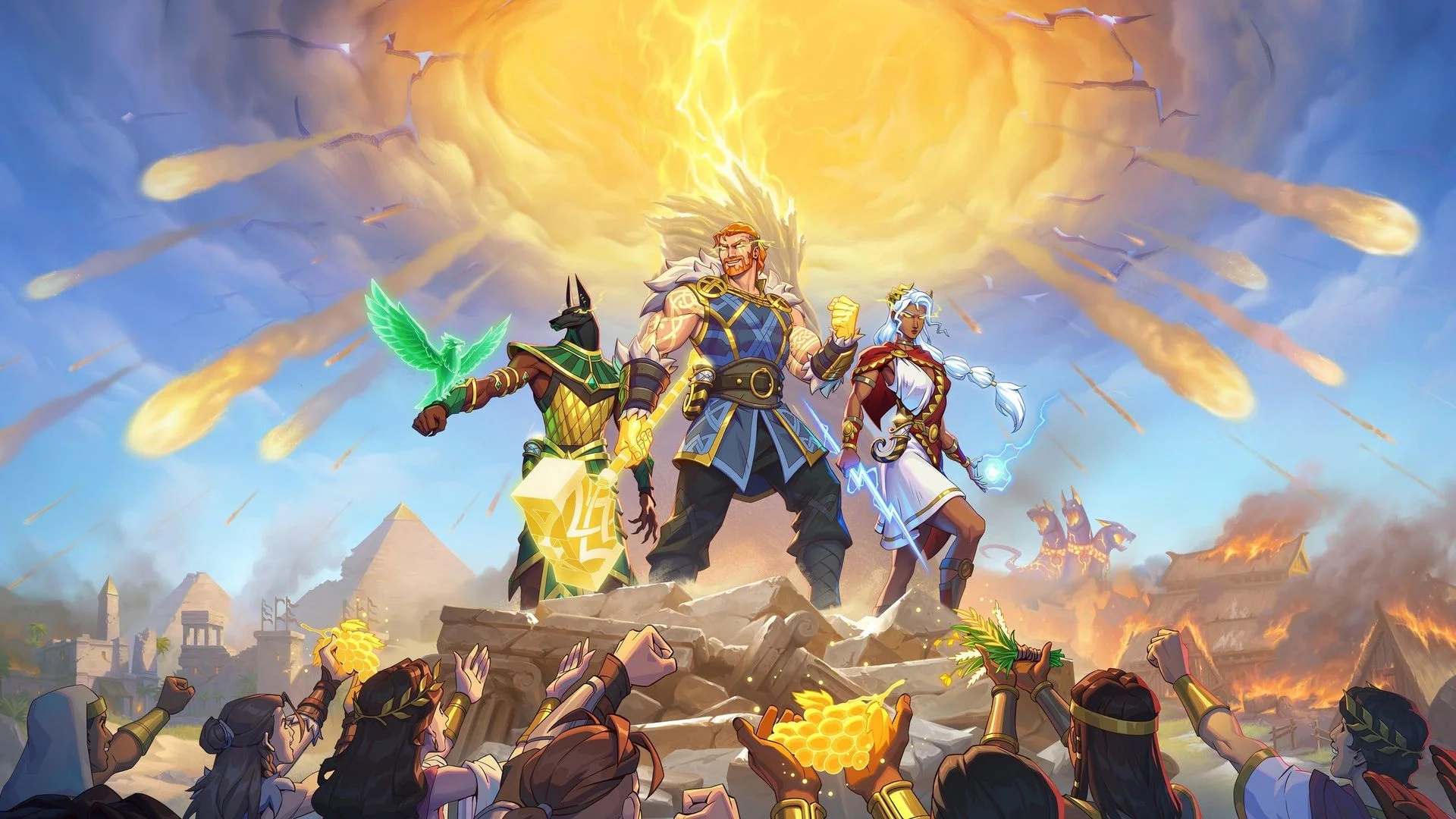
- Aftergods skill tree: Character growth is built around Godborn progression across pantheon themes and form switching.
- Four directions: Greek, Egyptian, Norse, and an Unknown bloodline shape long-term identity.
- Nectar is strategic: Spend it deliberately — it powers your divine form, not just raw stats.
- Mortal form matters: Plan progression for when divine power is unavailable.
- Co-op synergy: Skill paths should complement team roles in group play.
How the Aftergods Skill Tree Works
Aftergods links character identity to the ruined world left behind after Ragnarok. Rather than a single flat upgrade track, progression flows through the tension between your divine and mortal states. Your Godborn grows along a pantheon bloodline, and each investment decision affects exploration, combat, and survival at the same time.
The core loop is simple: gather Nectar and resources, invest in a growth direction, and use your divine form when it provides a real advantage. Every skill point should push one of three fronts — combat power, exploration range, or settlement infrastructure.
Aftergods is positioned as a "survivalite" — an open-world survival action RPG designed to reduce repetitive grinding and harsh punishment. Treat the skill tree as a planning tool, not a treadmill: pick a direction early and commit to it.
Pantheon Bloodlines and Growth Directions
Your bloodline choice defines the thematic identity of your Godborn, while your growth direction defines how you actually play. These two layers combine to form what functions as your skill tree: one axis of flavor, one axis of function.
| Bloodline | Theme | Best For | Progression Feel |
|---|---|---|---|
| Greek | Classical divine identity | Recognizable pantheon fantasy | Traditional heroic growth |
| Egyptian | Cultural and visual identity | Distinct mythological flavor | Structured, ceremonial |
| Norse | Heroic post-Ragnarok themes | Story-driven players | Gritty survival growth |
| Unknown | Mystery and discovery | Lore investigators | Revealed over time |
| Growth Direction | Focus | Core Skills | Ideal Player |
|---|---|---|---|
| Combat-Oriented | Surviving hostile encounters | Equipment readiness, sustained engagements | Players who expect frequent fights |
| Exploration-Oriented | Expedition range | Mobility, route planning, gathering | Mappers and gatherers |
| Builder-Oriented | Temple and production | Construction, automation, resource cycles | Base builders and long-term planners |
Combat Godborn
- Sustained engagement capability
- Equipment-first investment
- Resource reserves for repeated fights
Exploration Godborn
- Extended expedition range
- Safe-return route planning
- Shapeshifting synergy
Builder Godborn
- Temple infrastructure
- Follower-assisted automation
- Long-term settlement growth
Investing evenly across all three growth directions leaves your Godborn mediocre at everything. Commit to one primary direction, then use Followers and base systems to cover your weaknesses.
Nectar, Forms, and Skill Resource Management
Nectar is the engine behind divine progression. It connects directly to your divine form, and how you spend it determines whether you arrive at a dangerous encounter empowered or exposed. Skill planning in Aftergods is inseparable from Nectar planning.
| Resource / State | Role | Priority | Recommended Action |
|---|---|---|---|
| Nectar | Fuels divine power and Godborn progression | High | Track supply before combat; spend with clear purpose |
| Divine Form | Empowered state tied to your identity | High | Reserve for difficult encounters and key expeditions |
| Mortal Form | Vulnerable fallback state | High | Avoid fights, rely on positioning and gear |
| Food and Sustenance | Keeps expeditions running | Medium | Prepare reserves for the return trip |
| Combat Recovery | Stability after encounters | High | Recover at a safe location before re-engaging |
The most common progression mistake is treating divine power as unlimited. Enter a dangerous region with depleted Nectar and you will fight in mortal form — underpowered, underprepared, and far from safety. Budget Nectar the way you budget ammunition.
Step-by-Step Skill Tree Planning
Understand the Godborn System
Learn how divine and mortal states interact before committing points. Your skill investments should account for both — power when divine, survivability when mortal. Treat Nectar as a core progression resource, not an afterthought.
Secure Basic Resources First
Gather materials for food, early equipment, and shelter. A stable basic supply prevents you from being forced into dangerous areas before your skill investments can protect you.
Choose One Growth Direction
Pick combat, exploration, or building as your primary path. Align it with your pantheon theme and stick with it until the core skills in that direction are functional.
Build Supporting Systems
Develop your temple and recruit Followers whose abilities cover your weak spots. Automation reduces manual gathering pressure and frees you to push your main direction further.
Extend Exploration Deliberately
Use shapeshifting forms — Phoenix for air, Manticore for land, Siren for water — to match your growth direction to the regions you explore. Upgrade skills before difficulty rises, not after repeated failures.
Solo players should favor self-sufficiency and safe-return routes. In co-op, split the skill tree: one player maintains combat pressure while others cover gathering, construction, and terrain roles. A coordinated team effectively stacks three growth directions at once.
Form Synergy and Milestones
Shapeshifting is the exploration half of your skill tree. Match form investments to the terrain you intend to master.
| Form | Movement Role | Terrain Use | Skill Investment Priority |
|---|---|---|---|
| Phoenix | Aerial exploration | Open air, vertical routes | ★★★★ for explorers |
| Manticore | Land traversal | Rough overland terrain | ★★★★★ for combat builds |
| Siren | Aquatic exploration | Water routes and crossings | ★★★ for mixed regions |
| Form Switching | Adaptive traversal | Mixed air/land/water zones | ★★★★★ late game |
Essential Progression Milestones:
- Understand divine and mortal form dynamics
- Secure a reliable basic resource supply
- Commit to one primary growth direction
- Establish a functional base with temple space
- Recruit Followers covering your weaknesses
- Unlock at least two shapeshifting forms
Aftergods was publicly revealed in October 2026 and does not yet have a confirmed release date. Detailed skill names, node costs, and capstone abilities will be documented here as official information becomes available through the Steam page and official channels.
FAQ
Q: What is the Aftergods skill tree based on?
Progression is built around Godborn development: choose a pantheon bloodline (Greek, Egyptian, Norse, or Unknown) for identity, then invest in a growth direction — combat, exploration, or building — as your functional skill path.
Q: Does Nectar affect skill progression?
Yes. Nectar is the core resource tied to divine power and Godborn progression. Managing it well determines whether you can use your divine form during dangerous encounters and key expeditions.
Q: Can I change my growth direction later?
There is no confirmed respec system yet since the game has not launched. The safe approach is to commit to one primary direction and use Followers and base systems to cover gaps.
Q: Which growth direction is best for solo play?
Exploration-oriented growth suits solo players because it emphasizes preparation, mobility, and safe return routes. Combat-oriented growth also works if you maintain strong equipment and Nectar discipline.