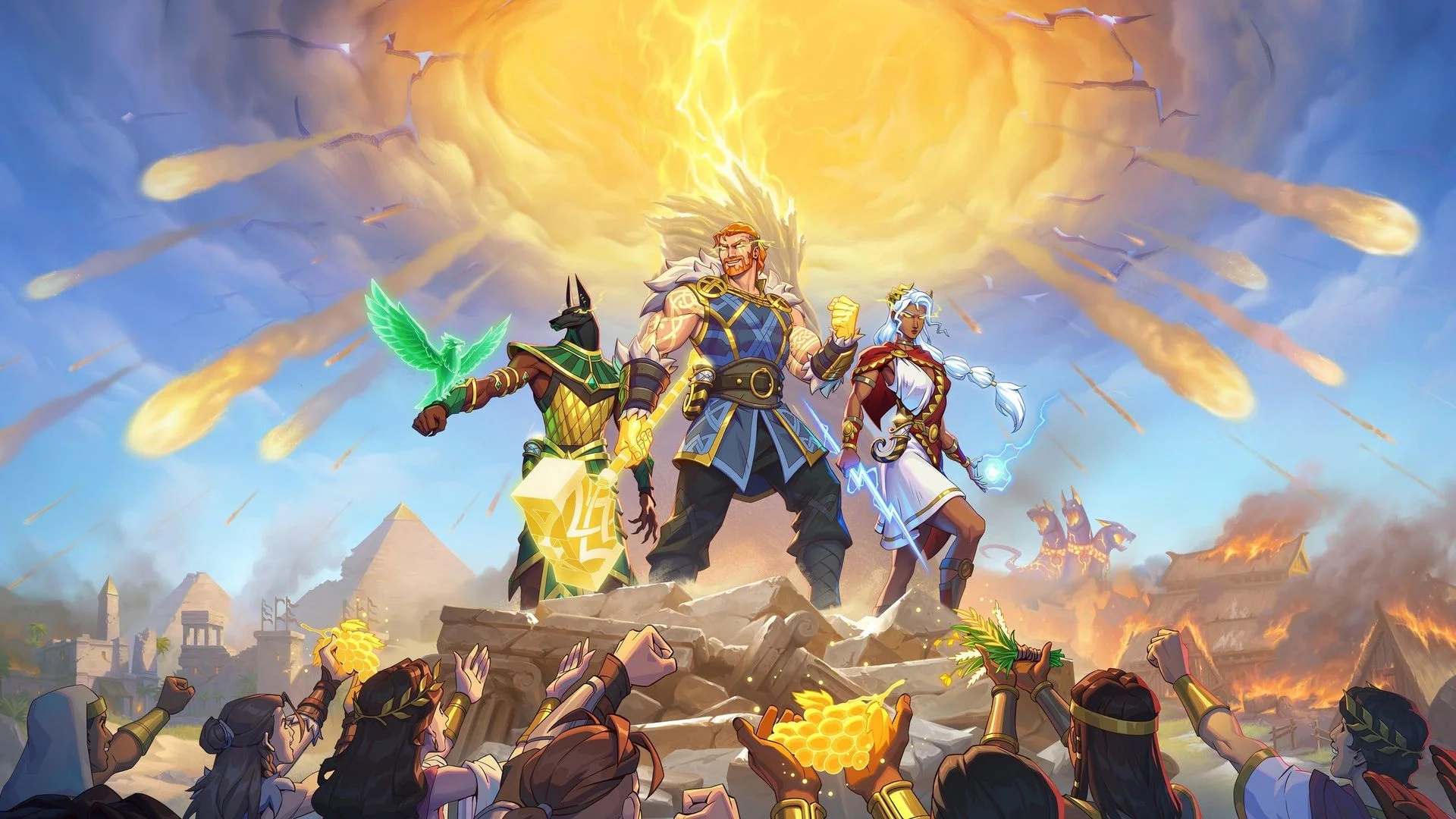
- Aftergods combat blends top-down action with divine powers, mortal form fallback, and shapeshifting mobility.
- Nectar is your lifeline: track it before every fight so divine power is available when it matters.
- Shapeshifting wins positioning: Phoenix, Manticore, and Siren forms solve terrain problems in battle.
- Giant monsters are environmental fights: read movement, use terrain, and keep escape routes open.
- Co-op roles matter: split pressure, positioning, and route-watching duties before engaging.
Aftergods Combat System Overview
Combat in Aftergods is built around the tension between your Godborn divine identity and your mortal form. As a top-down mythological survival action RPG, Aftergods lets you wield divine attacks and mythic abilities, but those powers depend on how well you manage Nectar and how prepared you are when a fight begins. Divine form offers meaningful advantages in difficult encounters, while mortal form is vulnerable and rewards caution, positioning, and preparation.
Because Aftergods is still in pre-release (revealed October 8, 2026, with a TBA launch date), exact skill trees and weapon stats remain unconfirmed. What we do know from the official site and Steam page gives us a clear picture of the combat pillars.
| Combat Pillar | What It Does | Priority |
|---|---|---|
| Divine Form | Empowered state tied to your pantheon identity | High |
| Mortal Form | Vulnerable fallback when divine power runs low | High |
| Nectar | Core resource fueling divine power and progression | High |
| Shapeshifting | Mythic creature forms for mobility and combat positioning | Medium |
| Equipment | Gear readiness determines fight sustainability | Medium |
| Co-op Roles | Team division of pressure, positioning, and support | Situational |
Treat every fight as a preparation cycle, not a reflex test. Check equipment, food, Nectar reserves, and your escape route before entering hostile territory.
Divine Powers and Pantheon Combat Themes
Your pantheon bloodline shapes your combat identity. Aftergods currently presents Greek, Egyptian, Norse, and an unknown bloodline category, each offering a distinct thematic approach to divine power.
Greek Pantheon
- Classical divine identity
- Recognizable mythological theme
- Strong starting point for new players
Egyptian Pantheon
- Distinct cultural power fantasy
- Strong visual identity
- Alternative to Greek tradition
Norse Pantheon
- Heroic combat themes
- Fits aggressive playstyles
- Distinct mythic direction
The unknown bloodline remains a mystery-oriented path rather than a confirmed specialization, so treat it as an exploration choice rather than a combat commitment.
Divine capabilities should be used when they provide a meaningful advantage — difficult encounters and major expeditions. Treating divine power as unlimited is the fastest way to arrive at a giant monster fight with nothing in reserve.
Combat Preparation: Step-by-Step
Follow this preparation cycle before every dangerous engagement, whether solo or in co-op.
Check Equipment Readiness
Maintain usable weapons and gear before leaving camp. Replace worn equipment rather than discovering its limits mid-fight.
Audit Nectar Reserves
Track your Nectar supply and avoid spending it without purpose. Never exhaust Nectar before a dangerous encounter.
Plan Your Movement Forms
Confirm your Phoenix, Manticore, or Siren forms match the terrain around the encounter area and provide a reliable escape option.
Stock Food and Supplies
Prepare sustenance for the fight and the return journey. Extending an expedition after supplies run low is a preventable failure.
Choose Battles That Fit Your Progression
Pick fights that support your current growth. If an approach is not sustainable, return to base, recover, and adjust.
After hostile encounters, recover at a safe location, repair gear, and reassess Nectar. Chaining multiple fights while depleted is the most common way players lose progress.
Shapeshifting in Combat
Shapeshifting is both an exploration tool and a combat positioning system. Each mythic form changes how you approach a battlefield.
| Form | Combat Role | Best Use |
|---|---|---|
| Phoenix | Aerial repositioning, bypassing ground hazards | Elevated routes, surveying fights from above |
| Manticore | Sustained overland mobility through hostile terrain | Crossing rough ground, extended pursuit |
| Siren | Aquatic movement and escape | Water-adjacent encounters, aquatic approaches |
| Form Switching | Adaptive traversal in mixed regions | Battlefields spanning air, land, and water |
Use terrain and shapeshifting to maintain access to safe positions during giant monster fights. Avoid relying on a single movement route when the encounter covers a large area.
Giant Monster Fights: Solo vs Co-op
Large monsters in Aftergods are environmental encounters as much as combat targets. Observe the monster's movement before committing to a close approach, and adjust your tactics as the fight changes instead of repeating one attack pattern.
| Aspect | Solo Approach | Co-op Approach |
|---|---|---|
| Pressure | Short attack windows, then reposition | One player maintains pressure, others watch routes |
| Positioning | Keep a reliable escape form ready | Assign players to monitor terrain hazards |
| Resources | Reserves for multiple engagement windows | Shared supplies coordinated before departure |
| Form Use | Match form to escape needs | Coordinate group form changes across air/land/water |
| Communication | Self-assessment between engagements | Team confirms entry before the fight begins |
For co-op specifics including P2P hosting and dedicated servers, Aftergods plans to support solo, online co-op, and offline play, per Gematsu's listing.
Enter every major encounter only when the entire checklist below is green. Preparation converts giant monster fights from gambles into repeatable wins.
Before Every Major Fight:
- Equipment checked and replacements packed
- Nectar reserves sufficient for the encounter
- Movement form matches the battlefield terrain
- Food stocked for the fight and return trip
- Escape route identified before engaging
FAQ
Q: What is Aftergods combat like?
Aftergods combat is top-down action built on divine powers, Nectar-fueled Godborn abilities, shapeshifting mobility, and preparation-based encounters. Divine form offers major advantages, while mortal form rewards caution and positioning when power runs low.
Q: What happens if I run out of Nectar during a fight?
You fall back on mortal form, which is significantly more vulnerable. Avoid unnecessary fights, retreat to safer areas, and rely on preparation, equipment, and positioning until you can recover Nectar at a safe location.
Q: How does shapeshifting affect combat?
Phoenix, Manticore, and Siren forms change your movement and positioning options. Phoenix handles aerial routes, Manticore excels at overland mobility through hostile terrain, and Siren covers aquatic approaches and escapes.
Q: Can I fight giant monsters solo?
Yes. Solo players should prioritize mobility, controlled engagements, and short attack windows, keeping enough resources for multiple engagement attempts. Return to base and adjust preparation if an approach is not sustainable.
Aftergods has not launched yet, so exact skill numbers and boss mechanics are still unconfirmed. Follow the official Discord and Steam page for the latest combat details.