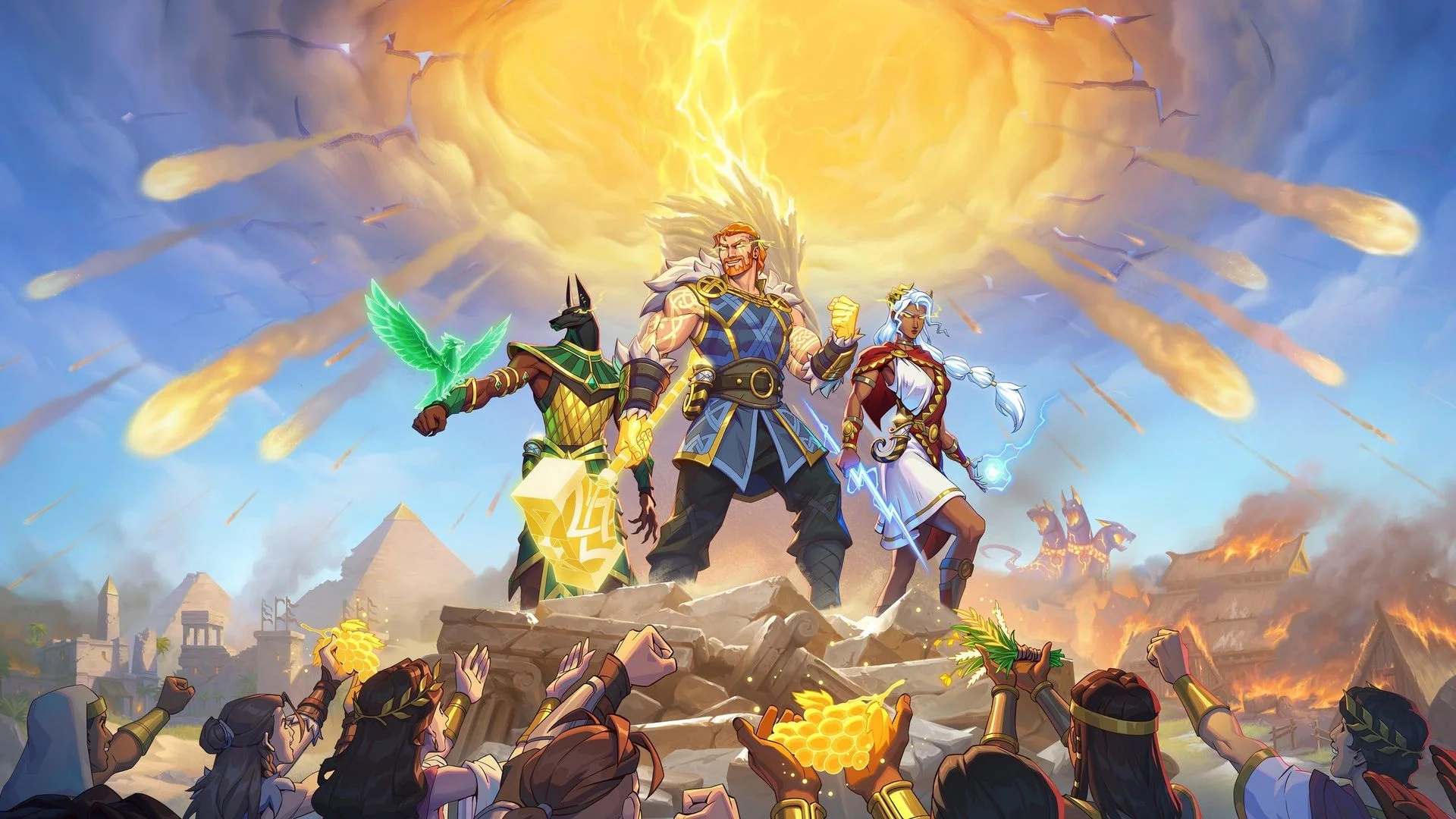
- Aftergods gameplay blends survival, action combat, building, and mythology in an open world after Ragnarok.
- Godborn identity: switch between divine and mortal forms, with Nectar powering your divine state.
- Shapeshifting into Phoenix, Manticore, or Siren unlocks aerial, land, and aquatic exploration.
- Followers and Pantheon: rescue survivors and old gods to automate your base and grow faith.
- Play solo or in online co-op on PC, PS5, and Xbox Series (release date TBA).
Aftergods Gameplay Overview: What the Game Actually Is
Aftergods is a top-down, open-world survival action RPG developed by Norsfell, revealed on October 8, 2026. You play as a Godborn — a survivor with divine heritage in a world left broken after Ragnarok and the collapse of the World Tree. The core Aftergods gameplay loop ties together exploration, survival pressure, base building, and mythological combat, all rendered from an isometric perspective.
The game is officially described as a "survivalite" — a take on survival games designed to reduce repetitive grinding and harsh punishment while keeping meaningful preparation and risk. You can read the official positioning on the Aftergods website and the Steam store page.
| Core Pillar | What It Means | Player Impact |
|---|---|---|
| Open world | Hand-crafted realms with Greek, Egyptian, Norse themes | Exploration and route planning |
| Survival | Food, Nectar, hazardous zones | Preparation before expeditions |
| Action combat | Top-down melee, ranged, divine powers | Skill-based encounters |
| Building | Temples, monuments, automation | Long-term progression |
| Co-op | Solo, online co-op, offline play | Flexible group play |
Because Aftergods was only just revealed, many details — including the release date — are still TBA. Treat specific numbers and boss data as provisional until official guides publish final values.
The Godborn System: Divine Power, Mortal Limits, and Nectar
The heart of Aftergods gameplay is the tension between your divine form and your mortal form. Divine power makes you formidable in combat and exploration, but it is supported by Nectar, a strategic resource you spend to sustain your godly state. Run dry in hostile territory, and you are forced to fight, flee, and survive as a vulnerable mortal.
Manage Nectar like currency, not fuel to burn on every minor encounter.
| System | Role | Priority | Recommended Action |
|---|---|---|---|
| Nectar | Powers divine form and progression | High | Track supply before fights; spend only with purpose |
| Divine Form | Empowered combat and expedition state | High | Save for difficult encounters and key objectives |
| Mortal Form | Vulnerable fallback state | High | Avoid fights, retreat, rely on gear and positioning |
| Food | Sustenance for long trips | Medium | Prepare before travel; keep return-trip reserves |
| Dangerous zones | High-threat areas | High | Scout gradually; keep a reliable escape route |
Do not chain multiple fights while depleted. Recover at a safe location, repair equipment, and reassess your Nectar before continuing — repeated engagements without recovery is the fastest way to lose progress.
Combat and Shapeshifting Gameplay
Combat in Aftergods plays out from a top-down perspective, mixing melee weapons, ranged attacks, and godly powers. What sets it apart is shapeshifting: your Godborn can transform into mythical creatures — the Phoenix, Manticore, and Siren — and each form changes how you move, fight, and traverse the world.
Phoenix
- Aerial exploration
- Fly between elevated areas
- Bypass ground obstacles
- Survey routes from above
Manticore
- Overland traversal
- Cross rough terrain fast
- Approach blocked regions
- Sustain long expeditions
Siren
- Aquatic exploration
- Swim through water zones
- Reach islands and separated areas
- Find alternate approaches
Against giant monsters, treat every fight as an environmental encounter as much as a combat one: observe movement before committing, use terrain and form-switching to stay safe, and never rely on a single movement route when the battle covers a large area.
Check that your movement forms match the encounter terrain before entering. A fight near water or cliffs rewards the correct transformation — arriving with the wrong form limits both your damage windows and your escape options.
Crafting, Temples, and Followers
Long-term Aftergods gameplay is built on a resource cycle: gather, craft, build, automate. Early on, prioritize practical survival functions — usable equipment, food reserves, and a secure return point — over decorative expansion. As your settlement grows, Followers take over routine work.
Followers come in several flavors, and prioritizing the right recruits matters more than recruiting everyone at once.
| Follower Type | Function | Best Time to Recruit |
|---|---|---|
| Survivors | Workforce for settlement growth | Early game |
| Old gods | Faith progression, Pantheon power | When base is stable |
| Automation specialists | Keep production running while away | Mid game |
| Expedition support | Field assistance for deep exploration | Before long trips |
Your temple is the central expression of Godborn development. Build essential functions first, reserve space for expansion, and match each Follower's assignment to your settlement's current bottleneck rather than spreading contributions across every task at once.
Automate the resources you repeatedly need for survival and expansion first. A stable resource cycle is the prerequisite for ambitious temple and base projects.
Step-by-Step: Your First Hours in Aftergods
Understand the Godborn System
Learn when divine power is available, the limits of mortal form, and treat Nectar as your core progression resource from the first minute.
Secure Basic Resources
Gather materials for food, early equipment, and shelter before traveling far. Keep an emergency reserve instead of spending everything immediately.
Establish a Safe Base
Build a dependable recovery point with organized storage, crafting access, and planned space for future temple upgrades.
Explore in Short Routes
Map nearby resources and dangers, keep a clear route home, and return regularly instead of overcommitting into unknown territory.
Prepare for Combat
Check equipment, food, Nectar, and escape routes before entering hostile areas. Choose battles that match your current progression.
Pick Your Mode: Solo or Co-op
Solo players should prioritize self-sufficiency and safe routes; groups should assign complementary gathering, combat, and building roles.
Aftergods supports solo play, online co-op, and offline play, with P2P hosting and dedicated server designs confirmed in public listings. Co-op groups can divide boss pressure, terrain watching, and form-based traversal roles to make giant encounters far more manageable.
Character Direction and Milestones
Beyond pantheon themes — Greek, Egyptian, Norse, and an unknown bloodline — your Godborn can grow along three practical directions: combat, exploration, or building. None is strictly superior; the right choice depends on how you want to spend your first dozens of hours.
| Direction | Focus | Recommended For |
|---|---|---|
| Combat-oriented | Equipment readiness, sustained engagements | Players who expect frequent fights |
| Exploration-oriented | Mobility, mapping, safe returns | Gatherers and route planners |
| Builder-oriented | Temple, production, infrastructure | Settlement and automation fans |
Early Game Milestones:
- Learn divine and mortal form switching
- Build a secure base with storage and crafting
- Establish a stable Nectar supply routine
- Unlock your first shapeshifting form
- Recruit your first Followers
- Complete your first giant monster encounter
Upgrade equipment before difficulty increases, not after repeated failures. If a region keeps defeating you, the answer is usually preparation — better gear, more Nectar, and the right movement form — not brute repetition.
FAQ
Q: What type of game is Aftergods?
Aftergods is a top-down, open-world survival action RPG from Norsfell. Aftergods gameplay combines exploration, survival management, action combat, base and temple building, and shapeshifting into mythical creatures, playable solo or in online co-op.
Q: What is Nectar in Aftergods?
Nectar is the core resource tied to your divine power and Godborn progression. It sustains your divine form, so you should track your supply before exploration or combat and avoid spending it without a clear purpose — running out forces you into vulnerable mortal form.
Q: Can you transform into mythical creatures?
Yes. Shapeshifting is a major system: the Phoenix covers aerial travel, the Manticore handles rugged overland routes, and the Siren enables aquatic exploration. Switch forms based on the terrain ahead rather than committing to one route.
Q: Does Aftergods have multiplayer?
Yes. Aftergods supports solo play, online co-op, and offline play, with P2P host and dedicated server designs referenced in public listings. Co-op groups can split boss pressure, terrain coverage, and traversal roles.