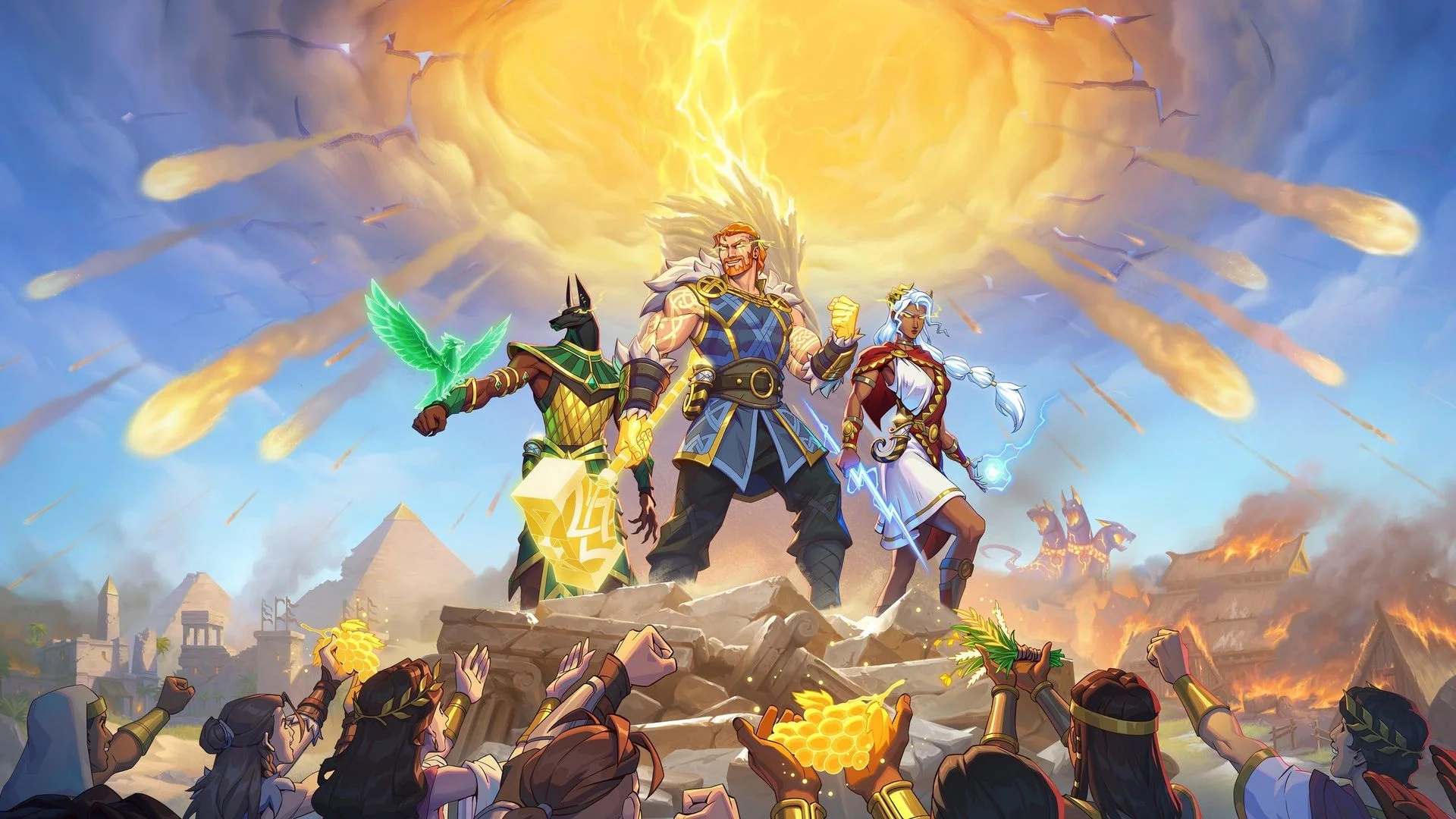
- Aftergods bosses are giant monster encounters requiring preparation, terrain awareness, and form management.
- Shapeshifting matters: Phoenix, Manticore, and Siren forms shape your positioning and escape options in battle.
- Nectar reserves determine whether you can sustain your divine form through a prolonged fight.
- Co-op roles split pressure, positioning, and route-watching duties across the party.
- Aftergods releases on PC, PS5, and Xbox Series with a date still to be announced.
Aftergods Bosses: What We Know So Far
Aftergods, the mythic open-world survival action RPG from Norsfell revealed on October 8, 2026, places giant monsters at the center of its toughest encounters. As a Godborn surviving after Ragnarok, you will face oversized creatures that function as both combat targets and environmental challenges — fights that unfold across large arenas where movement, terrain, and preparation matter as much as raw damage.
Because the game has not yet launched, confirmed boss names, health values, and drop tables remain unannounced. This guide focuses on the systems official sources have already described — combat preparation, shapeshifting mobility, divine versus mortal forms, and co-op coordination — so you can build the right habits before the first giant monster blocks your path.
Core boss-fight systems confirmed so far:
- Top-down action combat with divine powers, melee, and ranged options
- Shapeshifting into mythical creatures such as Phoenix, Manticore, and Siren
- Nectar as the strategic resource behind divine power
- Solo play plus online co-op with P2P hosting and dedicated servers
| System | Role in Boss Fights | Priority |
|---|---|---|
| Nectar | Fuels divine form during long encounters | High |
| Shapeshifting | Positioning, escapes, terrain crossing | High |
| Equipment | Sustained survivability across phases | High |
| Pantheon support | Base backup and follower bonuses | Medium |
| Food supplies | Recovery during extended expeditions | Medium |
Aftergods was only revealed on October 8, 2026. Specific boss rosters, mechanics, and rewards are still unannounced — treat any claimed boss list elsewhere as speculation until confirmed by the official site or Steam page.
Pre-Boss Preparation Checklist
Boss encounters in Aftergods reward preparation over improvisation. Before walking into any dangerous area, run through a preparation cycle covering equipment, forms, resources, and your route home.
Equipment Readiness
- Repair or replace worn gear before leaving base
- Match loadout to expected encounter difficulty
- Keep backup weapons in storage
Form Availability
- Confirm your movement forms suit the arena terrain
- Phoenix for vertical arenas, Manticore for open ground
- Keep an escape form ready at all times
Resource Reserves
- Track Nectar before committing to divine form
- Separate expedition supplies from emergency stock
- Pack food for the return trip
A common failure pattern in survival RPGs is chaining fights while depleted. Aftergods builds its whole survival loop around avoiding that trap: when divine power runs low and you drop to mortal form, you lose your strongest tools mid-fight.
If you cannot answer "how do I leave this fight if it goes wrong," you are not ready to start it. Plan an escape route and a form that can execute it before engaging any giant monster.
Boss Fight Strategy: Step-by-Step
Follow this engagement framework when you meet a major threat. It works for solo play and scales naturally into co-op coordination.
Scout Before Committing
Observe the monster's movement patterns from a safe distance. Learn its patrol area, attack windups, and which terrain it favors before closing in. Identify at least two escape routes.
Control the Opening Window
Start the fight on your terms: full Nectar, repaired equipment, and a chosen form. Open with your strongest reliable option rather than experimenting in the first seconds.
Fight in Short Engagements
Use short attack windows instead of staying exposed. Back out, reposition, and re-enter. Long exposure windows are how depleted players get punished in giant monster fights.
Manage Form Transitions
Switch forms to match the situation — aerial repositioning with Phoenix, overland pressure with Manticore, aquatic escapes with Siren. Do not exhaust Nectar sustaining divine form early in a long fight.
Reset When Needed
If the approach is not sustainable, retreat to base, recover, repair, and reassess. Coming back prepared beats repeated failed attempts with a depleted character.
| Phase | Focus | Common Mistake |
|---|---|---|
| Pre-fight | Scouting, route planning | Engaging with low Nectar |
| Opening | Controlled first exchange | Testing attacks mid-fight |
| Mid-fight | Windows and repositioning | Staying exposed too long |
| Extended fight | Nectar and form management | Burning divine form early |
| Recovery | Base reset and reassessment | Chaining fights while depleted |
Treat major enemies as environmental encounters, not just health bars. Use terrain to break line of sight, block charges, and create safe positions — and never rely on a single movement route when the fight covers a large area.
Solo vs Co-op Boss Tactics
Aftergods supports solo play, online co-op, and offline play with P2P hosting and dedicated servers. Giant monster encounters change significantly depending on party size.
Solo Approach
- Prioritize mobility and escape options
- Choose fights matching your current progression
- Conserve Nectar for critical moments
- Keep base recovery close enough to reach
Co-op Approach
- Assign roles: pressure, positioning, support
- One player maintains aggro while others watch hazards
- Coordinate form changes for mixed terrain arenas
- Communicate before starting the engagement
In co-op, the biggest gain is information. With multiple players watching movement routes and terrain hazards, the party can adapt faster than any solo player — but only if the team enters the fight together with a shared plan.
| Factor | Solo | Co-op |
|---|---|---|
| Damage windows | Short, conservative | Extended via role pressure |
| Error margin | Low | Shared across party |
| Resource demand | All on one player | Distributed |
| Terrain control | Personal forms only | Coordinated form coverage |
| Reset cost | Full retreat | Partial regroup possible |
Agree on one signal for retreat before the fight starts. Teams that coordinate form changes and retreat calls survive extended boss encounters far more reliably than groups that improvise.
Boss Readiness Checklist
Use this checklist before every major encounter. Once every item is checked, you are prepared on the systems currently confirmed for Aftergods.
Before Engaging a Giant Monster:
- Equipment repaired and loadout matched to encounter difficulty
- Nectar reserves tracked and emergency stock separated
- Movement forms confirmed for the arena terrain
- Escape route identified and tested
- Food supplies packed for the return journey
- Pantheon and settlement support reviewed
FAQ
Q: Are Aftergods bosses soloable?
Based on the systems confirmed so far, yes — Aftergods supports full solo and offline play. Solo boss attempts favor mobility, conservative engagement windows, and careful Nectar management, though specific boss difficulty is unannounced until launch.
Q: Does shapeshifting help in boss fights?
Yes. Phoenix, Manticore, and Siren forms provide distinct movement capabilities — aerial repositioning, overland mobility, and aquatic travel. In large boss arenas, switching forms to match terrain and escape needs is a core tactical layer.
Q: What happens if I run out of Nectar during a boss fight?
Nectar is tied to your divine power. When it runs low, you may be forced into mortal form, which is more vulnerable. The recommended approach is to avoid exhausting Nectar early and preserve divine power for critical phases of the encounter.
Q: How does co-op work for Aftergods bosses?
Aftergods supports online co-op with P2P hosting and dedicated servers. For boss encounters, teams benefit from assigning roles: one player maintaining pressure while others watch terrain hazards, movement routes, and positioning.