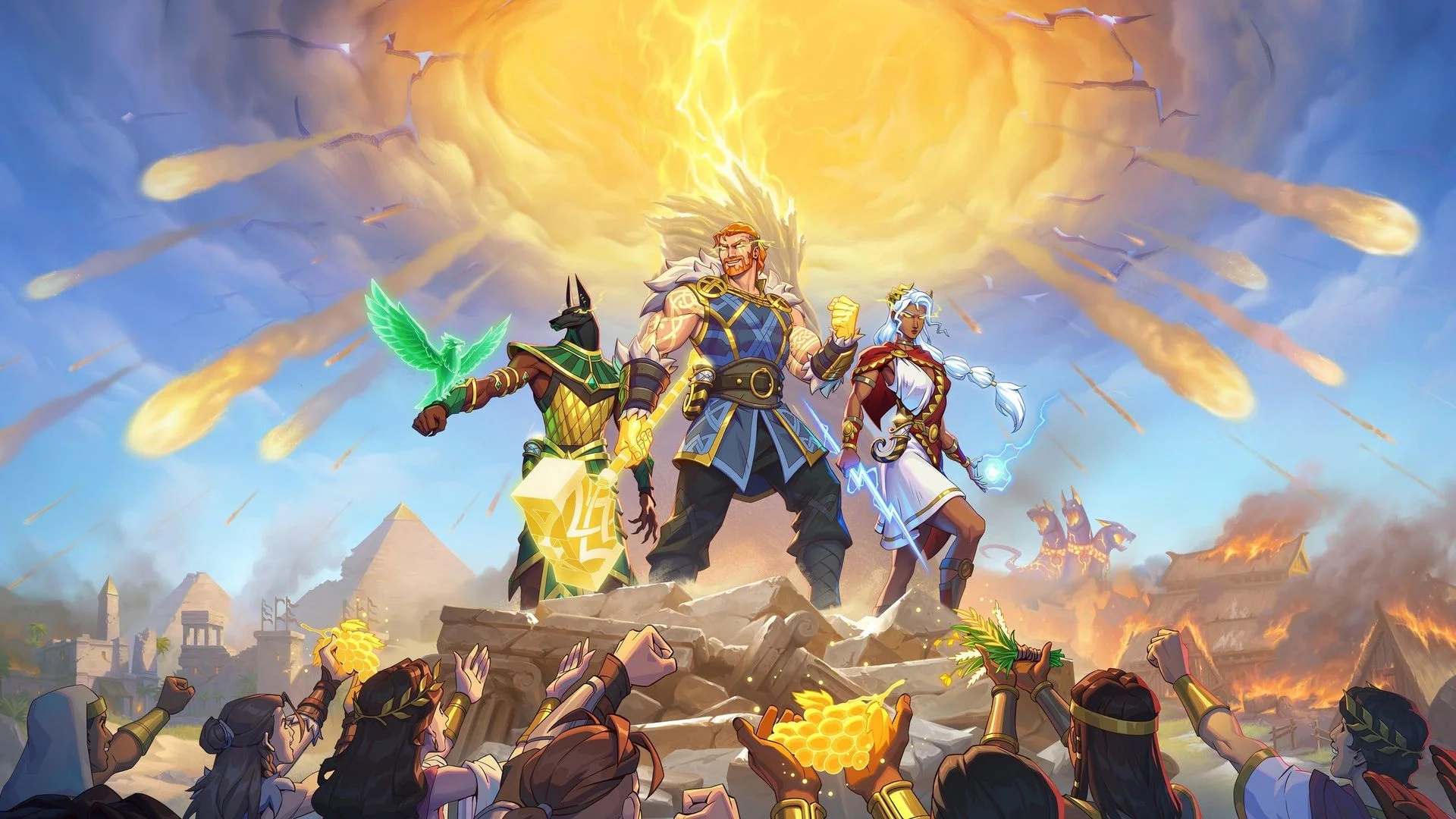
- Aftergods protagonist: You play a Godborn, a survivor born after Ragnarok who may reshape a broken world.
- Dual nature: The protagonist switches between a divine form and a mortal form, each with distinct strengths.
- Nectar is key: This resource sustains divine power — treat it as a strategic reserve, not an auto-spend.
- Choose a lineage: Greek, Egyptian, Norse, and an unknown bloodline define your thematic identity.
- Build a Pantheon: Recruit survivors and old gods to support your protagonist's long-term growth.
Who Is the Aftergods Protagonist?
The Aftergods protagonist is a Godborn — a being of mixed divine and mortal heritage who survives the fall of the old world. Ragnarok has shattered the World Tree, the old gods are gone or broken, and the Godborn stands as one of the few forces capable of restoring what was lost. Your journey centers on collecting World Tree seeds, rebuilding faith, and deciding what kind of new pantheon will rise from the ashes.
What makes this protagonist unusual among survival RPG leads is the constant tension between two states of being:
| Aspect | Divine Form | Mortal Form |
|---|---|---|
| Power level | Empowered godly abilities | Vulnerable, limited skills |
| Best use | Hard encounters, key expeditions | Safe travel, recovery, routine tasks |
| Resource tie | Consumes or depends on Nectar | Independent of Nectar |
| Main risk | Overconfidence and depleted reserves | Taking fights you cannot win |
| Playstyle | Decisive, high-impact | Careful, preparation-based |
The Godborn is not a chosen-one power fantasy. Aftergods deliberately alternates strength and vulnerability, so the protagonist feels divine at peak moments and fragile in between. Managing that cycle is the core of the game.
Protagonist Identity: Bloodlines and Pantheon Origins
Character identity in Aftergods is tied to ancient mythological bloodlines. The known groupings are Greek, Egyptian, Norse, and an unresolved unknown category. These choices shape the thematic direction of your Godborn rather than locking a fixed class.
Greek Pantheon
- Classical divine identity
- Recognizable mythological themes
- Good first pick for mythology fans
Egyptian Pantheon
- Strong visual and cultural identity
- Distinct from the Greek tradition
- Ideal for players seeking variety
Norse Pantheon
- Heroic, Ragnarok-adjacent themes
- Fits the post-apocalypse setting
- Strong narrative resonance
Unknown Bloodline
- Mystery-oriented direction
- Rewards discovery and investigation
- Details still unrevealed
Beyond lineage, the protagonist develops along practical growth directions. Combat-oriented Godborn prioritize equipment readiness and survivability in hostile regions. Exploration-oriented builds emphasize mobility, route knowledge, and safe returns. Builder-oriented protagonists invest in the temple, production, and long-term settlement infrastructure.
| Growth Direction | Core Focus | Best For |
|---|---|---|
| Combat-Oriented | Equipment, engagement practice, reserves | Frequent hostile encounters |
| Exploration-Oriented | Mobility, mapping, expedition range | Gathering and discovery |
| Builder-Oriented | Temple, production, infrastructure | Base development and automation |
The bloodline choice defines theme and identity, while growth direction defines how you actually play. Pick the pantheon that appeals to you narratively, then shape your protagonist's day-to-day routine through your growth priorities.
Nectar and the Divine-Mortal Cycle
Nectar is the protagonist's lifeline to divine power. How you manage it determines when your Godborn can operate as a god and when they must survive as a mortal.
| System | Priority | Recommended Action | Main Risk |
|---|---|---|---|
| Nectar | High | Track supply before exploration or combat | Entering danger without reserves |
| Divine Form | High | Deploy when it gives a real advantage | Treating power as unlimited |
| Mortal Form | High | Avoid fights, retreat, rely on preparation | Fighting as if still divine |
| Food and Sustenance | Medium | Prepare supplies for round trips | Extending depleted expeditions |
| Combat Recovery | High | Recover, repair gear, reassess Nectar | Chaining fights while depleted |
Assess Your Reserves
Before leaving your base, check Nectar, food, and equipment. Decide in advance which encounters justify divine power.
Travel in Mortal Form
Save divine strength for the objective. Use the vulnerable form for routine travel and low-threat gathering.
Commit Divine Power Deliberately
Shift into divine form when the situation genuinely demands it — a boss encounter, a critical crossing, or a rescue.
Recover Before Re-Engaging
Return to safety, restore supplies, and rebuild Nectar before the next major commitment.
Spend Nectar on purpose, never by habit. A protagonist who reaches a giant monster with an empty divine reserve has already lost the advantage that defines them.
The Protagonist's Pantheon and Followers
Your Godborn does not rebuild the world alone. Rescuing survivors, recruiting old gods, and assembling a Pantheon turns the protagonist from a wanderer into the center of a growing faith.
Survivor Recruits
- Workforce for your settlement
- Rescued during exploration
- Foundation for early base growth
Old Gods
- Faith and power progression
- Anchor your Pantheon's identity
- Connect to settlement belief systems
Automation Specialists
- Keep production running
- Reduce routine management
- Free the protagonist for expeditions
Follower assignments should match your protagonist's current bottleneck. If exploration stalls, prioritize field support. If gathering consumes all your time, add automation members. A balanced Pantheon supports every stage of the Godborn's journey — early survival, mid-game expansion, and late-game faith development.
Protagonist in Combat and Exploration
The protagonist's shapeshifting ability extends their reach across every terrain type in the broken world. Each mythical form answers a different movement problem.
| Form | Movement Role | Best For |
|---|---|---|
| Phoenix | Aerial exploration | Flying between elevated areas, surveying routes |
| Manticore | Land traversal | Long overland routes, hostile wilderness |
| Siren | Aquatic exploration | Water crossings, aquatic approaches |
| Form Switching | Adaptive traversal | Mixed regions with varied obstacles |
For giant monster encounters, the protagonist wins through preparation rather than raw aggression. Check forms against the battlefield terrain, keep resources for multiple engagement windows, and in co-op, assign one player to pressure the monster while others manage positioning and hazards.
Solo protagonists should choose a form that matches the encounter area and guarantees an escape option. If an approach is not sustainable, retreat to base and reprepare — the world is persistent, and so is your temple.
Protagonist Early-Game Checklist
Godborn Milestones:
- Understand the divine and mortal form cycle
- Secure stable food and basic crafting materials
- Establish a safe base with storage and recovery
- Complete short exploration routes with reliable returns
- Rescue first survivors and begin the Pantheon
- Maintain a Nectar reserve for major encounters
Aftergods was revealed on October 8, 2026 and does not yet have a confirmed release date. Follow the official site and the Steam page for protagonist details as they are announced.
FAQ
Q: Who is the protagonist in Aftergods?
The Aftergods protagonist is a Godborn — a survivor of mixed divine and mortal heritage who awakens after Ragnarok. Their journey involves restoring World Tree seeds, recruiting followers, and building a new pantheon from the ruins of the old world.
Q: Can the Aftergods protagonist switch forms?
Yes. The Godborn operates between a divine form tied to Nectar and divine power, and a mortal form that is vulnerable but resource-independent. Shapeshifting into mythical creatures like the Phoenix, Manticore, and Siren further expands movement options.
Q: Does the bloodline choice lock in a class?
No. The Greek, Egyptian, Norse, and unknown bloodlines define thematic identity rather than a fixed class. Your actual playstyle is shaped by growth direction — combat, exploration, or building — and how you develop your Pantheon.
Q: Is the protagonist stronger in solo or co-op play?
The protagonist is viable in both. Solo play rewards conservative preparation and mobility, while co-op lets groups divide gathering, combat, and construction roles around the Godborn's objectives.