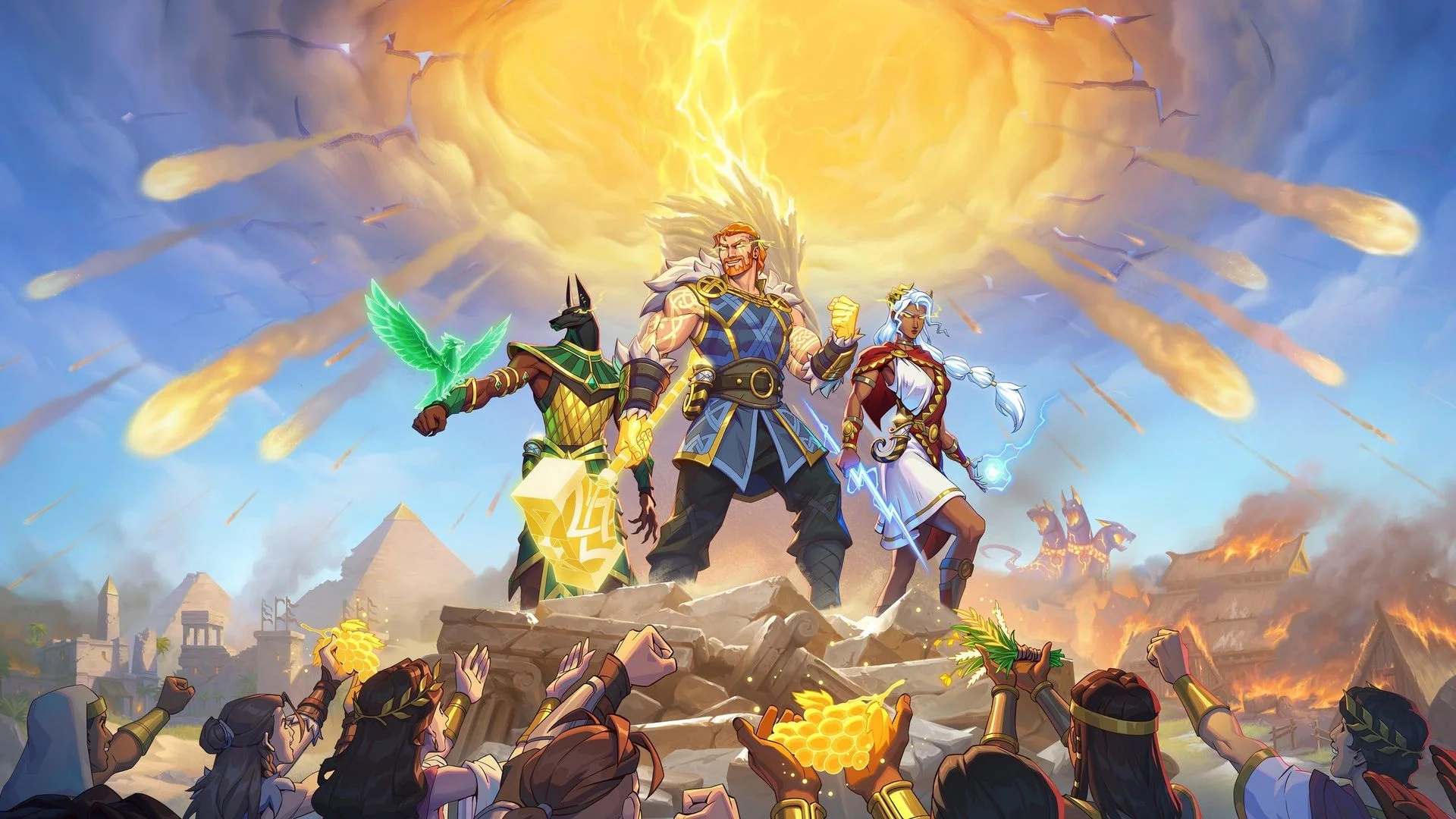
- Aftergods characters center on the Godborn, survivors with divine blood after Ragnarok
- Four bloodlines: Greek, Egyptian, Norse, and a mysterious Unknown category
- Divine vs mortal forms: Nectar sustains divine power; mortal form is vulnerable but resource-efficient
- Followers and old gods are recruitable characters that build your Pantheon and automate your base
- Shapeshifting forms like Phoenix, Manticore, and Siren define exploration and combat mobility
Aftergods Characters: Who Are the Godborn?
Aftergods characters live in a world shattered after Ragnarok and the collapse of the World Tree. As a Godborn, you carry divine blood that lets you wield godly power, recruit believers, and ultimately shape a new pantheon. Your character operates between two states: an empowered divine form fueled by Nectar, and a vulnerable mortal form you fall back on when divine power runs dry.
This tension defines every Aftergods character. Combat, exploration, and base-building all revolve around when to spend Nectar, when to transform, and when to play carefully as a mortal.
Your Godborn is not a fixed class. Bloodline, growth direction, followers, and shapeshifting forms all combine into a flexible character identity you develop across a full campaign.
Character type | Role | Source of Power
| Type | Role | Power Source |
|---|---|---|
| Godborn (Player) | Protagonist, explorer, combatant | Divine blood + Nectar |
| Survivors | Recruitable workforce for your settlement | None (mortal labor) |
| Old Gods | Pantheon members, faith anchors | Residual divinity |
| Mythical Forms | Shapeshift travel and combat options | Godborn transformation |
| Giant Monsters | Boss-tier enemies | World corruption |
Godborn Bloodlines and Growth Directions
Character building starts with choosing a bloodline theme, then a growth direction. The known bloodline groupings are Greek, Egyptian, Norse, and an unresolved Unknown category. Each shapes the thematic identity of your Godborn rather than locking a rigid role.
Greek Pantheon
- Classical divine identity
- Recognizable mythology theme
- Strong heroic tradition
Egyptian Pantheon
- Distinct cultural identity
- Strong visual themes
- Alternative to Greek tradition
Norse Pantheon
- Heroic survival theme
- Fits the post-Ragnarok world
- Distinct mythological identity
Unknown Bloodline
- Mystery-driven path
- Rewards discovery and lore hunting
- Least defined progression
Growth directions overlay your bloodline choice and define how you actually play:
Bloodline | Combat Godborn | Exploration Godborn | Builder Godborn
| Bloodline | Best Growth Fit | Why |
|---|---|---|
| Greek | Combat-oriented | Classical heroic confrontation theme |
| Egyptian | Builder-oriented | Temple and monument identity |
| Norse | Combat / Survival | Hardship and endurance themes |
| Unknown | Exploration-oriented | Discovery-focused mystery path |
Treat these pairings as thematic suggestions, not restrictions. Any bloodline can pursue any growth direction—match your choice to the playstyle you enjoy, not assumed bonuses.
Building Your Character: Step-by-Step
Developing a strong Aftergods character follows a clear progression arc from opening moments to endgame pantheon building.
Understand Divine and Mortal States
Learn when divine power is available and what mortal form can and cannot do. Nectar is the bridge between the two, so treat it as your most important strategic resource from the first hour.
Choose a Bloodline Theme
Pick the pantheon that matches the mythology you want to explore. The choice shapes your character's identity and long-term narrative, so pick the theme that excites you most.
Commit to an Early Growth Direction
Decide whether your first arc emphasizes combat, exploration, or building. Focus resources there instead of spreading progression thin across all three.
Recruit Followers and Old Gods
Rescue survivors for your workforce and recruit old gods to anchor your Pantheon. Followers automate production and free your character for longer expeditions.
Master Shapeshifting Forms
Unlock and practice Phoenix, Manticore, and Siren forms. Form switching turns mixed terrain into an advantage and is essential for reaching remote regions and boss arenas.
Avoid entering dangerous areas with low Nectar. Running out mid-expedition forces you into mortal form at the worst possible moment, and repeated depleted engagements are the fastest way to lose progress.
Followers and Old Gods: Your Pantheon Characters
Followers are the supporting cast of Aftergods characters. Recruiting the right mix turns a fragile camp into a self-sustaining settlement and a genuine Pantheon.
Follower Type | Function | Priority For
| Follower Type | Function | Recruit First When |
|---|---|---|
| Survivors | Base workforce, gathering, construction | You need labor for early expansion |
| Old Gods | Pantheon members, faith progression | You are developing faith systems |
| Automation Specialists | Keep production running while away | You explore for long stretches |
| Expedition Support | Prepare and supply field trips | You push into unfamiliar regions |
Survivors
- Workforce backbone
- Enable settlement expansion
- Support longer expeditions
Old Gods
- Faith and power anchors
- Specialize your Pantheon
- Connect base growth to divinity
Specialists
- Automation and field support
- Reduce routine management
- Match recruits to your bottleneck
Assign each follower to the single most urgent need in your settlement. Spreading contributions across every task at once dilutes their value.
Mythical Forms: Shapeshift Characters
Shapeshifting forms function as secondary characters in your kit. Each mythical form suits different terrain and combat scenarios, and switching between them is the key to efficient travel.
Form | Movement Role | Best Terrain | Exploration Use
| Form | Movement Role | Best For |
|---|---|---|
| Phoenix | Aerial | Flying between elevated areas, surveying routes, bypassing ground obstacles |
| Manticore | Overland | Sustained land travel, rough terrain, hostile wilderness |
| Siren | Aquatic | Water routes, reaching areas separated by sea, aquatic approaches |
| Form Switching | Adaptive | Mixed regions combining air, land, and water barriers |
Forms matter in boss encounters too. Use terrain-appropriate forms to maintain safe positioning against giant monsters, and coordinate form changes with teammates in co-op so the group can cross air, land, and water routes together.
Character Development Checklist
Character Milestones:
- Learn divine and mortal form timing
- Choose and commit to a bloodline theme
- Establish a stable Nectar management routine
- Recruit first survivors and an old god
- Unlock and practice all three mythical forms
Aftergods was revealed on October 8, 2026, and detailed character stats, skills, and class data are still being published. Follow the official website, the Steam page, and the official Discord for new character reveals.
Aftergods Characters FAQ
Q: What are Aftergods characters called?
Player characters are called Godborn—survivors with divine blood living after Ragnarok. Supporting characters include recruitable survivors, old gods, and mythical shapeshifting forms like the Phoenix, Manticore, and Siren.
Q: Do bloodlines function as classes?
Not exactly. Greek, Egyptian, Norse, and Unknown bloodlines define thematic identity rather than a rigid class. Growth directions—combat, exploration, or builder-oriented—shape how your Godborn actually plays.
Q: Can I change my character build later?
Growth directions are flexible and built from how you allocate effort, so you can shift focus over time. Treat bloodline as a fixed thematic identity and growth direction as an evolving playstyle choice.
Q: Are followers permanent party members?
Followers are settlement-based characters. They staff your base, run automation, and develop your Pantheon's faith rather than traveling as combat companions, which keeps your Godborn as the active field character.